
The Demon’s Joke — or Delage’s Demon
I saw one of those wonderfully suspicious YouTube titles: CURSED FILMS.
And, of course, I couldn’t resist. I clicked.
On the other side of the screen, a middle-aged presenter named Getro was telling this absolutely deranged story involving Georges Méliès, occultism, and a supposedly infamous little film so wicked that, with the help of some celebrated occultist of the time, Méliès may have created a work capable of disturbing even the calmest souls.
Well, damn it, Getro was convincing.
So I started digging. And digging. And digging.
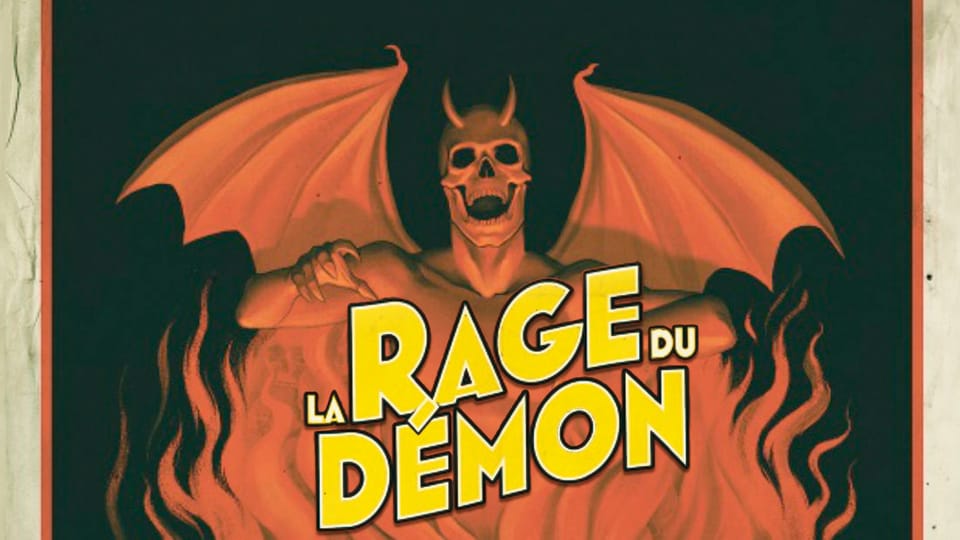
The cursed object of my obsession had a name: La Rage du Démon — or, in English, Fury of the Demon. Everything I found pointed to a 2016 film by Fabien Delage, described as an investigation into one of the rarest and most controversial works in early French cinema: a lost short film, sometimes attributed to Georges Méliès, that supposedly provoked violent reactions in anyone unlucky enough to watch it.
Which was great.
Except for one tiny, irritating problem:
Where the hell was the film?
For three exhausting months, I hunted this insane thing through the less respectable neighborhoods of the internet. A few streaming services showed up on Google as if they might have it, but every time I followed the trail, the same miserable truth was waiting for me: removed from the catalog ages ago, vanished, gone, swallowed by the void.
I was this close to emailing Delage himself like some desperate cinephile detective who had lost both dignity and sleep.
Then I got an invite to a very strange Chinese torrent site — the kind of place that looks like it was coded during a blackout and translated by a ghost. And there it was.
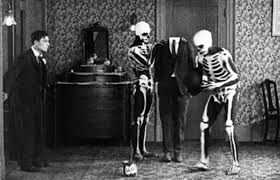
The mysterious documentary.
Right in front of me.
I clicked. I downloaded. I watched.
And now I have to explain Delage’s little trick.
Because La Rage du Démon is not exactly a documentary. It is a mockumentary — or, as the French beautifully call it, a documenteur: a false documentary that takes real historical material and wraps it in fiction until the lie starts wearing a very convincing suit. AlloCiné says it plainly: Delage’s film uses genuine elements and dresses them in invention.
And that is where the whole thing becomes delicious.
Delage doesn’t just invent a cursed film. He builds a cursed film-shaped trap.
He uses the authority of talking heads, film historians, critics, archive-style footage, and famous genre names to make the absurd feel almost respectable. The cast of interviewees includes people like Christophe Gans, Alexandre Aja, Jean-Jacques Bernard, Philippe Rouyer, Dave Alexander, and even Pauline Méliès — a descendant of Georges Méliès himself.
That detail is evil in the best possible way.
Because once Pauline Méliès appears, your brain lowers the drawbridge. You think: Well, if the Méliès family is involved, maybe there’s something here. And Delage knows it. He understands that the best lie is not the one shouted in your face, but the one that arrives wearing a museum badge.
The film’s legend is simple and perfect: in 1897, a strange short film appears in Paris and sends the audience into a frenzy. Then it disappears. In 1939, it allegedly resurfaces in New York, and chaos follows again. Decades later, in 2012, it is shown at an invitation-only screening in a Paris wax museum, and once again the room collapses into madness.
A cursed film that appears once per century, leaves blood on the floor, then vanishes?
Come on. That is premium-grade cinematic nonsense. The expensive kind. The good stuff.
And Delage makes it even better by tying the fictional cursed film to Georges Méliès, the magician of early cinema. Méliès was already the perfect target for this kind of mythmaking: a stage magician turned filmmaker, a pioneer of visual effects, a man who understood that cinema was not just a machine for recording life but a machine for corrupting reality. The official Méliès site credits him with early uses of double exposure, split screen, and dissolves; MoMA notes how his sets, costumes, and effects helped turn cinema into a place where dreams could become visible.
So when someone whispers, “Maybe Méliès made a film too dangerous to survive,” a tiny, stupid, wonderful part of your brain wants to believe it.
But the real punchline is this: the cursed film, the demonic screenings, the mysterious Victor Sicarius — all of it is fabrication. Smoke and mirrors. A cinematic séance with the lights on. One review puts it bluntly: both La Rage du Démon and its supposed director Sicarius are invented illusions, conjured for Delage’s audience.
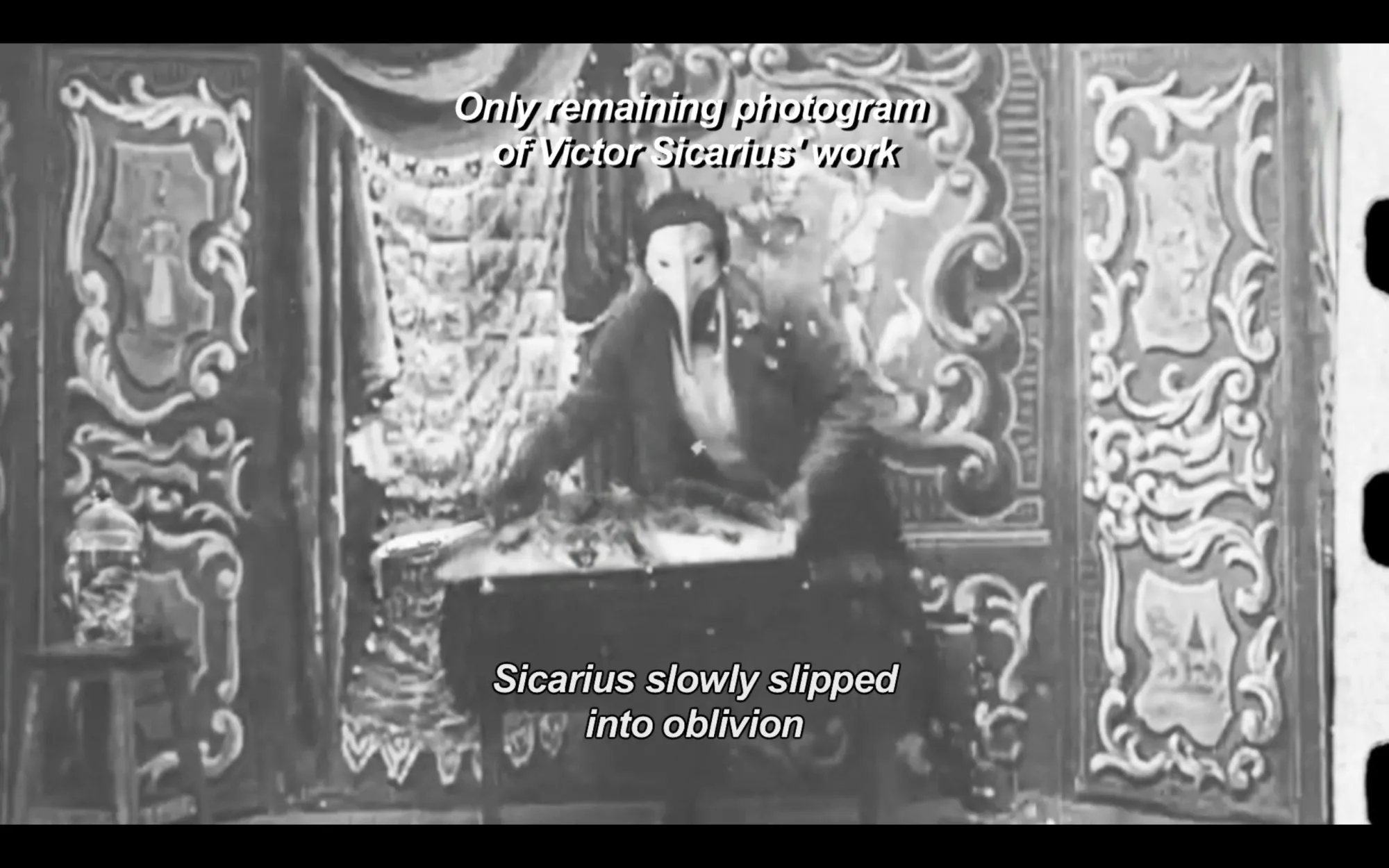
And honestly?
That makes the film better, not worse.
Because Delage’s hoax is not some cheap internet creepypasta wearing a beret. It is a love letter to early cinema, to lost films, to the madness of collectors, to the terrifying idea that images might have consequences. The whole thing works because it understands the psychology of people like me — people who hear “lost cursed Méliès film” and immediately start digging like raccoons in an occult dumpster.
There are also some lovely little oddities around the production. The film runs about an hour, was produced by Hippocampe Productions, mixes French and English, and officially sits somewhere between documentary, fantasy, the strange, cinema history, and legend. AlloCiné also notes that its premise recalls Robert W. Chambers’ The King in Yellow, another fictional work-within-a-work said to drive its readers mad — the same poisonous literary lineage that later helped feed the mythology of True Detective’s first season.
So no, I did not uncover a forbidden Méliès film capable of turning respectable people into theater-destroying lunatics.
I uncovered something sneakier.
I found a film pretending to be a documentary about a film pretending to be a curse — and for one very embarrassing moment, I let the trick work on me.
Which, in the end, is exactly what Méliès would have appreciated.
After all, cinema was always a haunted machine.
Delage just had the nerve to put the ghost back inside.