


Power doesn't love you back
From Plato’s ring of Gyges to Hume, Madison, Orwell and Arendt, the greatest minds in history warned us not to trust power. So why do we keep printing politicians’ faces on T-shirts? An essay on governments, idols and Brazil’s endless wait for a savior.
Every election in Brazil ends the same way. Half the country cries, the other half sets off fireworks, and somewhere a grown man posts a photo of himself kissing a printed picture of a politician. Families stop talking over Christmas dinner. Friendships of twenty years end in a WhatsApp group. People who can't name their own city councilor will fight to the death for a man in Brasília who has never heard their name and never will.
It still makes me angry, mostly because the people who taught us better have been dead for centuries, and we keep ignoring them.
So let's go back to them. The case against trusting governments and worshipping politicians isn't new, and it doesn't come from angry teenagers. It comes from some of the most careful minds in history.
The oldest warning #
In the Republic, Plato tells the story of the ring of Gyges, a shepherd who finds a ring that makes him invisible. He doesn't use it to do good. He uses it to seduce the queen, kill the king and take the throne. The question Plato puts on the table is simple and uncomfortable: would anyone stay just if they could never be caught?
Political power is the closest thing we have to that ring. It gives a person the means to act, the resources to hide and, too often, the friends to make sure nobody looks too closely.
A few centuries later, the Roman poet Juvenal asked the question that still has no satisfying answer: quis custodiet ipsos custodes? Who will guard the guards themselves?
Power works on people #
In 1887, the historian Lord Acton wrote the line everyone half remembers: "Power tends to corrupt, and absolute power corrupts absolutely." People forget the sentence that comes right after it: "Great men are almost always bad men."
Acton wasn't being cynical for fun. He was a historian, and he'd spent his life reading about kings, popes and revolutionaries. His conclusion was that the problem isn't one bad leader. It's what power does to whoever holds it.
Montesquieu said it even more plainly in The Spirit of the Laws, in 1748: "constant experience shows us that every man invested with power is apt to abuse it, and to carry his authority as far as it will go." Instead of hunting for better men, he wanted things arranged so that "power should be a check to power." That idea, the separation of powers, is the foundation of almost every modern constitution, including ours. It exists for one reason: nobody should be trusted with all of it.
Build for the worst, hope for the best #
David Hume, the Scottish philosopher, gave us what I think is the most useful political rule ever written. In designing a government, he said, "every man ought to be supposed a knave," with no goal in his actions except his own interest.
That sounds bitter, and it's really just engineering. You don't design a bridge assuming the trucks will be light. You design it for the heaviest truck that could ever cross it.
James Madison, writing in The Federalist No. 51, put it this way: "If men were angels, no government would be necessary. If angels were to govern men, neither external nor internal controls on government would be necessary." We need government because people aren't angels. And for the exact same reason, we need to keep the government on a short leash.
In the twentieth century, Karl Popper took this further. He said political philosophy had been asking the wrong question for two thousand years. "Who should rule?" leads straight to the search for a savior. The better question, he wrote in The Open Society and Its Enemies, is this: "How can we so organize political institutions that bad or incompetent rulers can be prevented from doing too much damage?"
Read that again and think about how much of our political debate is about the first question, and how little is about the second.
Why the worst rise #
It would be nice to believe that politics rewards the wise and the honest. Friedrich Hayek gave a chapter of The Road to Serfdom a title that answers this: "Why the Worst Get on Top." His argument was that the more power a government concentrates, the more it attracts people who enjoy wielding it, and the more it rewards those willing to do whatever it takes to keep it.
The economist James Buchanan, who won the Nobel Prize for this line of work, called his approach "politics without romance." The idea is almost embarrassingly obvious once you hear it: politicians are people. They respond to incentives like the rest of us. They want to be re-elected, they want money for the next campaign, they want to protect their allies and their own skin. Expecting them to become selfless the moment they take office makes as much sense as expecting a car salesman to talk you out of buying a car.
The words they use #
George Orwell, who saw propaganda up close, wrote in 1946 that "political language is designed to make lies sound truthful and murder respectable, and to give an appearance of solidity to pure wind."
Pay attention to campaign slogans with that sentence in mind. Pay attention to how a new tax becomes a "contribution", how censorship becomes "fighting disinformation", how a broken promise becomes "a change in the scenario". Those words exist to anesthetize.
Hannah Arendt, who studied the totalitarian regimes of the last century, went somewhere darker. She wrote that the ideal subject of totalitarian rule isn't the convinced believer. It's the person for whom the difference between fact and fiction, and between true and false, no longer exists. A single lie is survivable. The real damage comes after enough of them, when people stop caring what's true and just pick a team.
The idol #
Here's what really bothers me. Distrusting governments is old wisdom. Worshipping politicians is something worse, because it switches off the distrust.
Nietzsche called the state "the coldest of all cold monsters" and said it lies coldly, and that its lie is this: "I, the state, am the people." Every politician who becomes an idol tells the same lie, just with a friendlier face. I am you. My enemies are your enemies. Criticizing me is attacking you.
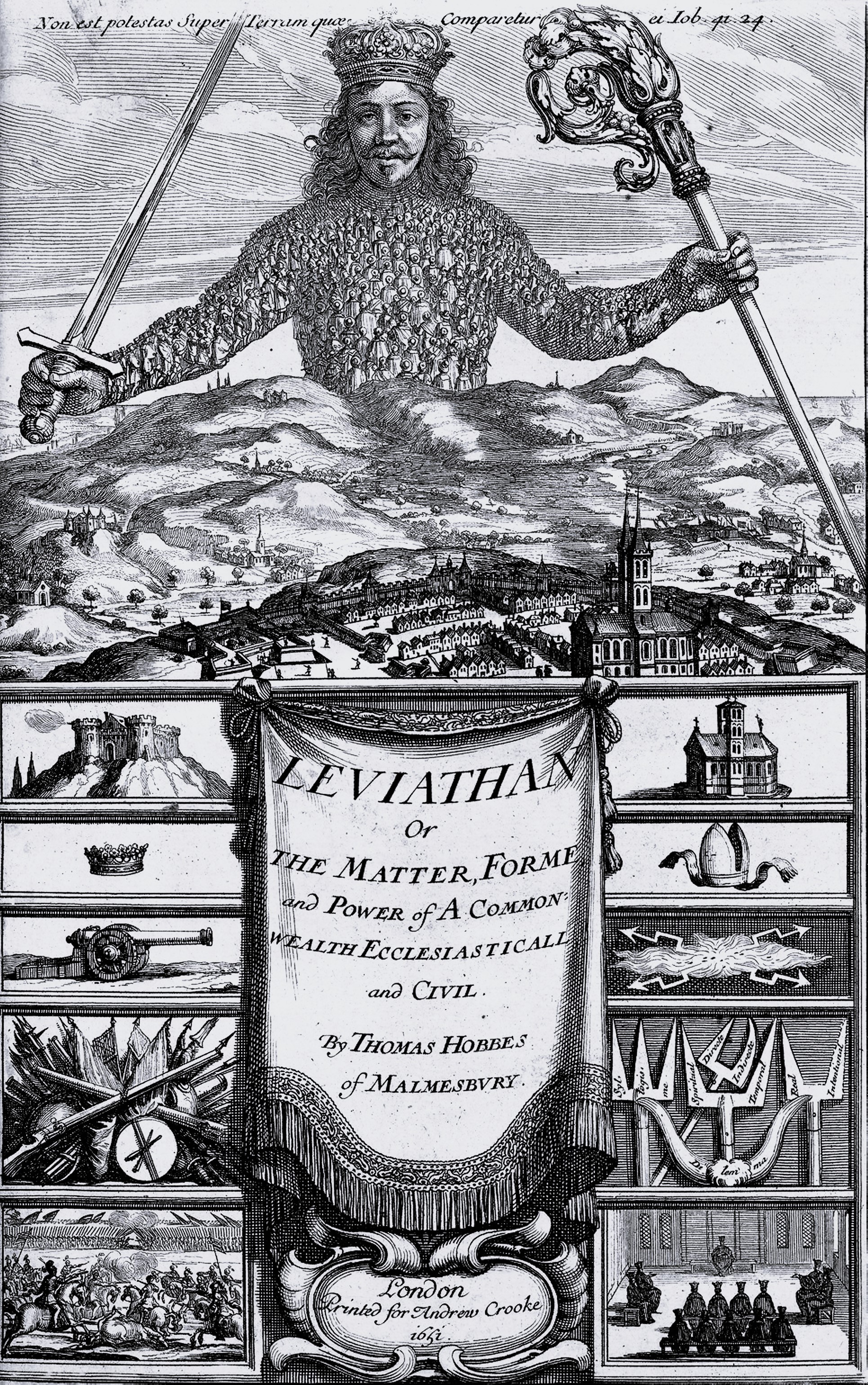
Thomas Hobbes put that idea on the cover of Leviathan in 1651, and he meant it as a defense of strong rule: a crowned giant with a sword in one hand, his body made of hundreds of tiny people. Look closely and you'll see that almost none of them face us. They're all turned toward the head.
In 1956, Nikita Khrushchev stood before the Soviet Communist Party and gave a speech titled "On the Cult of Personality and Its Consequences." He was describing what had happened under Stalin, a man whose portraits hung in every office while millions were being sent to the camps. Personality cults don't only happen to other countries. They happen wherever people are willing to stop thinking and start adoring.
Brazil has a long history with this. The Portuguese gave us Sebastianism, the centuries-old belief that King Sebastião, who vanished in battle in 1578, would one day return to save the nation. We've been waiting for him ever since, under different names. Getúlio Vargas was "the father of the poor". Collor was "the hunter of maharajas", three years before his impeachment. On one side, people chant a name like a prayer. On the other, they call their man "the myth". Different faces, the same habit. We keep looking for a king who'll come out of the fog and fix everything, and we keep being surprised when he turns out to be a man.
They work for us #
John Locke, whose ideas shaped modern democracy, described government as a "fiduciary" power, a trust. The people hand it over for specific ends, and when the government acts against that trust, the people have the right to take it back.
That's the relationship. A politician is an employee with a temporary contract. You don't put your employee's face on your T-shirt. You don't defend your employee when he steals from you. You don't break up with your brother because he criticized your employee.
Thomas Paine, in Common Sense, wrote that "society in every state is a blessing, but government even in its best state is but a necessary evil; in its worst state an intolerable one." We can need it and still refuse to love it.
Alexis de Tocqueville warned about a quieter danger: a government that doesn't need to oppress anyone, because people have already handed over their own judgment. It doesn't break wills, he wrote, it softens and bends them, until the nation becomes "a flock of timid and industrious animals, of which the government is the shepherd."
Then what? #
None of this means giving up on politics, and it certainly doesn't mean that all politicians are the same. Some are far worse than others, and pretending otherwise is just another way of not paying attention.
It means changing the way we look at them:
- Judge by what they did, not by what they promise or who they say they are.
- Support rules that limit power, even when your side is the one in power. Especially then.
- Keep the press free, the courts independent and speech protected, because those are the tools that let us remove bad rulers without blood.
- Admire ideas, never people. An idea can be tested. An idol can only be defended.
- Never let a politician turn your neighbor into your enemy. He'll be gone in a few years. Your neighbor won't.
Around 1548, a young Frenchman named Étienne de La Boétie wrote an essay that still feels dangerous. His point was that tyrants have only the power we give them. They don't have a thousand arms; they borrow ours. "Resolve to serve no more," he wrote, "and you are at once freed."
By Montaigne's account, he was eighteen when he wrote it. Some of the most grown-up political thinking ever written came from a kid who simply refused to bow.
Sources #
- Plato, Republic, Book II (the ring of Gyges)
- Juvenal, Satires, VI
- Lord Acton, letter to Mandell Creighton, 1887
- Montesquieu, The Spirit of the Laws, Book XI, chapter 4: National Constitution Center
- David Hume, "Of the Independency of Parliament": Hume Texts Online
- James Madison, The Federalist No. 51
- Karl Popper, The Open Society and Its Enemies, vol. 1, chapter 7
- Friedrich Hayek, The Road to Serfdom, chapter 10
- James Buchanan, "Politics without Romance" (1979)
- George Orwell, "Politics and the English Language" (1946)
- Hannah Arendt, The Origins of Totalitarianism
- Thomas Hobbes, Leviathan (1651), frontispiece via Wikimedia Commons
- Friedrich Nietzsche, Thus Spoke Zarathustra, "On the New Idol"
- Nikita Khrushchev, "On the Cult of Personality and Its Consequences" (1956)
- John Locke, Second Treatise of Government, chapter XIII
- Thomas Paine, Common Sense (1776)
- Alexis de Tocqueville, Democracy in America, vol. 2: Online Library of Liberty
- Étienne de La Boétie, Discourse on Voluntary Servitude: Wikipedia