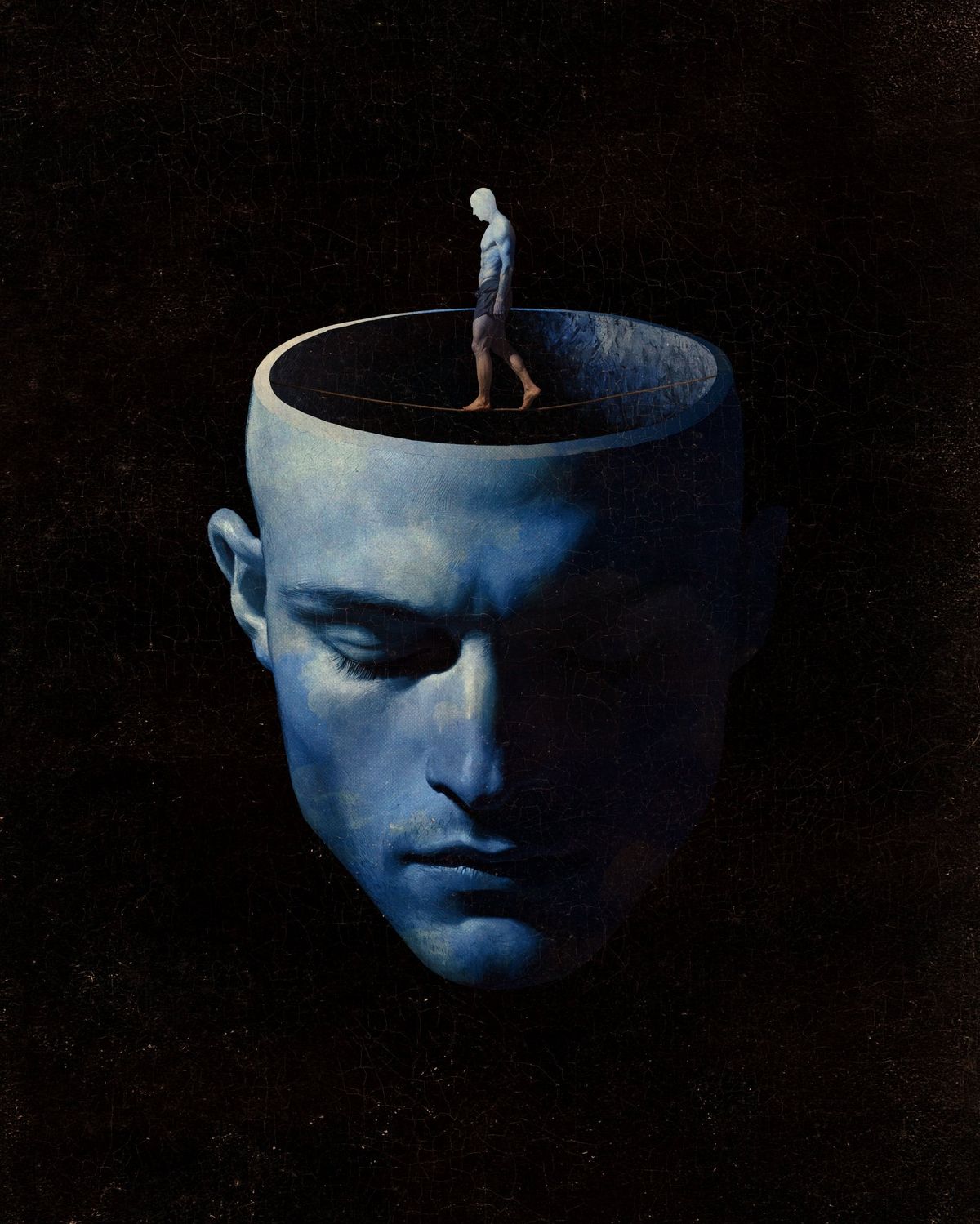

The Secret Company of Things
There are many people who suffer from the affliction of loneliness. It is enough for silence to gather around them, enough for no human presence to appear before their eyes, for an immense anguish to take hold of them — as though the weight of the heavens had collapsed upon their heads, as though, from the horizons, there rose the announcement of the end of the world.
And yet, is there such a thing on Earth as true solitude? Are we not all surrounded by countless objects, by infinite forms of Nature? Is not our private world filled with memories, dreams, reflections, and ideas that prevent any absolute loneliness from taking root?
Everything is alive, and everything speaks around us, though with a life and a voice that are not human — but which we may still perceive and hear, for often this secret language helps illuminate our own mystery. Like that Sultan Mahmud, who understood the speech of birds, we may turn all our sensitivity toward that apparent emptiness of solitude; and little by little, we shall feel ourselves enriched.
Painters and photographers move around objects in search of angles, plays of light, the eloquence of forms, seeking to reveal what seems to them not only the most static aspect of those objects, but also the most communicable, the richest in suggestion, the most capable of conveying what exceeds their physical limits — something that, in a certain way, constitutes their spirit and their soul.
Let us, too, become seers in this manner: let us look slowly at the color of the walls, the design of the chairs, the transparency of the windowpanes, the gentle fabrics woven without great pretension. Let us not seek in them the beauty that immediately ravishes the eye, the balance of lines, the grace of proportions; often their appearance — like that of human beings — is awkward and ungainly.
But that is not all we seek. What we are trying to discern is their inner meaning. Let us love, in these humble things, the burden of experience they represent, and the resonance, perceptible within them, of so much human labor across endless centuries. Let us love what we feel of ourselves in these varied things, since, selfish as we are, we scarcely know how to love anything except that in which we find ourselves.
Let us love the ancient enchantment of our childhood eyes, when they first began to discover the world: the veins of wood, with their paths of forests and waves and horizons; the patterns of tiles; the glaze of porcelain; the quiet, methodical rooftops. Let us love the murmur of running water, the sounds of machines, the restless voices of animals we wish we could translate.
Everything around us throbs with life, and it is almost a duty of love to apply our ears, our eyes, and our hearts to this infinity of natural and artificial forms that enclose their secrets, their memories, their silent experiences. The rose taking leave of itself, the mirror upon which our face comes to rest, the pillowcase across which the dreams of the sleeper are traced — everything, everything is a world with a past, a present, and a future, through which we pass either attentively or distractedly.
It is a delicate world, one that does not impose itself by force: it accepts our frivolity or our reverence; it waits for us to discover it, without announcing itself or seeking to prevail; it may remain forever unknown, without for that reason ceasing to exist; it does not turn its presence into an insistent proclamation: “I am here! I am here!”
Rather, concentrated in its own essence, it reveals itself only when our senses are prepared to discover it. And in silence, it offers us its manifold companionship — generous and invisible.
Oh, if you complain of human loneliness, pay attention, around you, to this magnificent presence, to this abundant language that overflows from everything, and it will converse with you endlessly.