Dracula Before the Blood
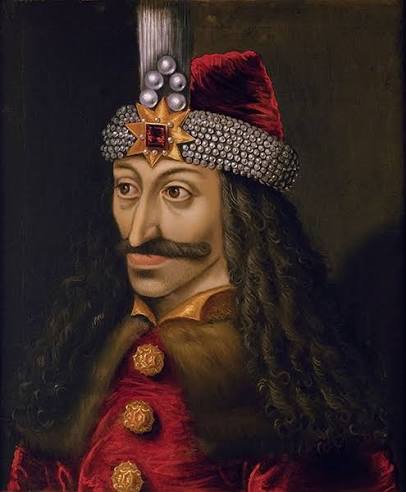
He ordered women and children, some barely one or two years old, to be impaled. He forced his victims into acts of cannibalism, had prisoners flayed, buried others alive, and was said to dine — even raise a toast — among the corpses. According to some accounts, he dipped his bread in the blood of the dying, when he was not drinking it from a cup.
This charming figure went by the name of Vlad. History would remember him as Vlad Țepeș — Vlad the Impaler — or Dracula, a name often translated as “son of the dragon,” and later associated with “son of the devil.” He was a prince, and centuries later his legend helped inspire Bram Stoker’s Dracula. In time, he would also become a grim symbol for Nicolae Ceaușescu, the dictator who turned Romania into his private kingdom of fear.
Vlad Țepeș, or Dracula, was the son of Vlad II, prince of Wallachia. He was born in 1431 in the city of Sighișoara, in northern Romania. The house where he was born still stands. Over the years, it has served different purposes — even as a home for the elderly — and today it houses a restaurant. Curiously, Vlad the Impaler also had a half-brother, Vlad the Monk, who chose a life of religion.
Wallachia lies in the south of Romania; Transylvania, in the central and northern part of the country. For centuries, the two regions were bound together by shifting alliances and rival powers — sometimes united, sometimes independent, often caught between Hungarian and Ottoman influence. It was within this dangerous game of power that Vlad and his father ruled.
Revenge
When Vlad Țepeș was about eleven years old, his father, Vlad II, was taken prisoner by the Ottoman sultan Murad II, who doubted his loyalty. To prove a loyalty that barely existed, Vlad II handed over his own sons, Vlad and Radu, as hostages — and saved himself. The boys remained in Ottoman hands for six years.
That wound would help shape Dracula’s life. Revenge became more than an impulse; it became a purpose. As Raymond T. McNally and Radu Florescu write in In Search of Dracula and Other Vampires, Vlad developed a reputation as deceitful, cunning, insubordinate, and brutal — a young captive who inspired fear even in his own guards.
He escaped from the Ottomans in 1448, a year after his father’s murder. For a brief moment, he took the throne of Wallachia, but his first reign lasted only two months. The political ground was unstable, and the rival Dănești princes soon seized power. Dracula was left adrift. He resurfaced in Transylvania and sought mercy from Hunyadi.
Hunyadi saw himself as a defender of Christendom against the Ottoman Turks, and he needed a reliable candidate for the Wallachian throne. The Dănești princes leaned toward the Turks; Dracula, by contrast, could be useful. With Hunyadi’s support, Vlad took the throne of Wallachia for a second time, ruling from 1456 to 1462.
The fear of Ottoman expansion was real. In 1453, the Turks had conquered Constantinople, and many believed Transylvania could be next. Once in power, Dracula’s cruelty revealed itself fully — though, as with so much surrounding his life, fact, exaggeration, political propaganda, and popular legend are difficult to separate. His brutality may be understood in the context of war against the Ottomans; it cannot be excused by it.
Raised in the Christian faith, Dracula seems to have believed that any means were justified in defending his borders, his throne, and Christendom itself. In Romania, he has often been remembered not merely as a monster, but as a national hero. In 1976, on the five-hundredth anniversary of his death, he was honored across the country; even a commemorative stamp bearing his portrait was issued.
The stories of his cruelty are endless, and many have dissolved into folklore. One account claims that, at the head of twenty thousand men, he devastated Transylvania and impaled ten thousand former allies, accusing them of competing unfairly with Wallachian merchants.
Vlad Țepeș remains suspended between history and nightmare: prince, patriot, butcher, legend. The man fought empires. The myth outlived them.
ref: https://www1.folha.uol.com.br/fsp/1997/8/11/turismo/4.html