
Seul contre le monde.
Perhaps this is my bitterest story: the one that hurts, the one I carry as error, wound, and legend. A story I avoided speaking about for almost twenty years.
That cursed Nazism. Humanity's greatest curse.
For a short time, a tiny time, it was the filthy ground where I planted an experiment. I was sixteen. As I write this, I am thirty-six.
To tell how it began, I need to speak of a convergence of facts, tragic coincidences, and wrong places. This story is a demonstration of human perversity mixed with the bitter broth of collective hysteria - or perhaps a Mandela effect. I still do not know how to classify it.
I have always liked history. Always. And I learned early to be critical. The year was around 2002 or 2003; I am not sure. I remember only one thing: Lula had been president of Brazil for a little more than six months, after his first victory for the presidency.
I knew history. I knew the horrors of the German Holocaust - and the Soviet horrors as well. I could not understand how that pseudo-intellectual communist ideology could occupy classrooms with such insistence. The bias of that period, at least as I perceived it, was already to teach that capitalism was bad, communism was good, and any student who thought differently was immediately pushed into the label of fascist.
It is curious how socialist ideologies, almost Siamese twins, fight for an impossible separation: one must die so the other can inherit the body.
I understood one thing: banners.
When I say banners, I am not speaking only of political parties. I am speaking of something worse: abstract ideological banners. To me, both were equally ridiculous in size and degree. But both offered a powerful temptation: the promise of being different.
I do not say this because I had embraced an ideology. I say it because I saw many teenagers wanting to be different, wanting to believe blindly in something. Some without critical thought, without doubt; others preaching from the pulpit of their own party.
Then, one morning, the teacher entered the classroom. He was the history teacher. I will not name names or places. But that is how it began.
I was no specialist in practical economics, much less a political theorist. I knew the subjects well enough to try to think for myself. And after Mises, the famous Karl Marx made no sense to me.
The teacher came in saying nonsense, indirectly attacking the means by which many people put food on the table: capital. It was the way of life we had there, rudimentary or not. And, like every good narcissist of utopia, he knew how to criticize, but he offered no better strategy.
Pointing to the problem without offering a way out is not being an intellectual. It is only being someone who problematizes.
My economic theory, simple as it was, saw an advantage in that system. The teacher and I entered into a heated debate. He tried to ridicule me in front of my friends and classmates. I was a skinny boy, my face full of pimples, of Arab descent. In front of everyone, he referred to me as a "Nazi."
And that was enough for every eye in the room to turn toward me.
I confess that, at the time, I did not care that much. But it would cause me trouble at many points in my life.
I remember coming home and thinking about the episode. It had been extremely unpleasant. I was foolish not to tell my parents. I let it go. I think I was afraid they would go to the school and, somehow, embarrass me even more.
The school's configuration was curious: rich boys wearing communist and anarchist symbols on their backpacks, the opposite of the blood their parents had given so they could be there, in that elite school.
And I knew where the problem was. It was not an isolated problem; there were three or four of them. And now the problems were the "cool" teachers.
So my classmates began calling me a Nazi, thanks to the infamous funny teacher. And I thought: interesting. So they want something to be shocked by?
I began researching what existed - or what Nazis were - in the present day. I came across neo-Nazi groups, never in person, but in news stories and magazines. I started reading about them. Watching films about them: from American History X to Romper Stomper. I did not know exactly what to do, but I had an idea: maybe I could be provocative.
There was, however, one problem: those people did not like punks.
And I was a punk.
Every week I showed up with my hair a different color. On the eve of the emo movement taking shape, punks had gained a certain notoriety. I listened to everything from Ramones to Dead Kennedys. All of that fascinated me. But I was about to take the most wrong step of my life in order to provoke teachers.
I would pass myself off as a skinhead.
I shaved my head down to zero - and that look bothered me a lot. To give the situation a kind of Marilyn Manson air, I also shaved off my eyebrows. Anyone who had ever seen a skinhead and then looked at me would probably have thought I was more an aspiring drag performer than a neo-Nazi.
But the plan worked. They bought it.
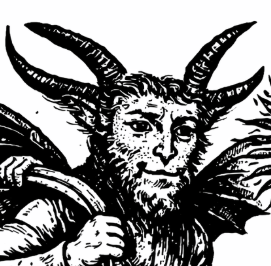
I had unmistakably androgynous features and, like that, I became a peculiar creature. I looked like the devil as he appears in Mel Gibson's The Passion of the Christ. People began to look at me with unease.
Some people, with whom I later spoke amicably, said they had feared I might one day end up as the protagonist of a massacre. It is worth remembering: Columbine was still recent; it was still in the air. And Gus Van Sant's Elephant had premiered in 2003, carrying with it an attempt to portray the lives of those two boys.
The young people of that time, with Donnie Darko swimming in their heads, did not hesitate to make their connections when they saw me:
"Look. There goes the maniac."
I did not care. I had been confronted before.
Even though I recognize that shaving my head was a terrible idea - and believe me, it was the worst one of all - that was not my first disappointment at school. When I was younger and even thinner, I suffered a certain kind of bullying in public schools for being the son of the pretty teacher. Some classmates did things ranging from silly to outright vicious: they stole my lunch, cornered me in empty parts of the schoolyard for beating sessions.
You grow up knowing you need to defend yourself. You grow up half rebellious, half punk. You grow up thinking there is something wrong with you.
But I am not here to justify myself. I am here to give facts. And I say: all of this happened. It is up to you whether to believe Pablo on Pablo's own word.
By the end of 2004, I had abandoned the idea of being a skinhead. I had laughed enough, entertained myself enough with disgusted faces, displeased enough people. Now I had to study for the university entrance exam, under which we lived with a certain pressure. It seemed that staying in the city was synonymous with being a loser, while leaving the small town - even for one smaller still - meant, somehow, winning.
Leave the city and you have already won.
My nerves were raw. I needed to study. I had been diagnosed with ADHD, but I did not give it importance. It seemed like something that would not bother me. That was my third and greatest mistake: not giving that diagnosis its due weight, early as it was. Life would charge me for it in the future. But that is another story.
Let us return to the story of the boots.
I had abandoned the idea of being provocative.
But the idea had not abandoned me.
In 2005, I moved to another city to study Law. I came back to my hometown only from time to time. Money was short, the distance was long, and the route was perhaps the most complicated of all. That meant I rarely came home.
Then, in 2009, while talking to some students from the school, one of them turned to me and said:
"The teacher said there was a student here who had a Nazi website."
I was startled. In truth, I was horrified. Why was that man, so many years later, still talking about me?
I thought he was probably referring to me. After all, I knew of no other pseudo-skinhead in that institution.
The shadow of a rotten ideology, which for an instant I had used as a stupid defense, had changed shape. Now it had turned against me.
I began hearing murmurs about my stories and adventures. Curiously, things in which I had never taken part. As always, I ignored them. I knew people do not always have the gift of critical thinking. Perhaps talking would not help me. My ignorance, my lack of preparation, my burden.
Thinking that this would change was another mistake.
In 2013, I became an extremely reclusive person. I was back in the city, incredibly bored, and whenever I met someone new, it did not take long for that person to question me about my adventures in the fictional "Reich."
It bored me. Then it began to distort the way I saw things. I did not talk about it. This text may be the first time I have truly spoken of it. I had always held to the idea of "let it go, it is nonsense."
I avoided confrontation.
I write this not as a confession, because I committed no crime. I write it as a form of relief. I write to remove from my body something that bothers me - not to say something that has disturbed me - for basically two decades.
The less you socialize, the less you want to socialize. I began avoiding the community in order to avoid those stories.
And I became even more reclusive.
You start to get paranoid, you know?
The rumors had already spread. I was a legend. No one considered the fact that a man of Lebanese descent, with several Jewish relatives, could not be that shit. I witnessed a very interesting phenomenon: they wanted to believe the legend.
No one ever asked me seriously about that story. No one ever came to me wanting to know my version. And I did not want to talk either.
The seed grew. It became an immense tree with deep roots. And I felt fear. I was afraid of that story - not for myself, but for my family, for my relatives.
The mark had been made.
But the fatigue, the exhaustion all of this caused me, took away the energy I needed to fight it. I was once again cornered in an empty alley, being beaten without being able to scream.
I make this text my scream.
I do not know whether anyone will read it. But here I record my version of the facts.
This is the story of the giant Nazi of the small town.
The real story everyone seems unwilling to believe.
Believe me. Talking about this hurts. A lot. And maybe this is the last time I want to talk about it. That’s it.