
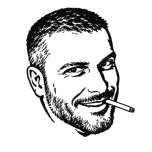

The face that haunted Bell Labs
Meet Peter Weinberger, the W in AWK. In the 1980s his portrait escaped and took over Bell Labs: org charts, T-shirts, a water tower, wet cement, microchips, a chocolate mask. Today his face still shows up in Plan 9 whenever a character is missing.
Meet Peter.
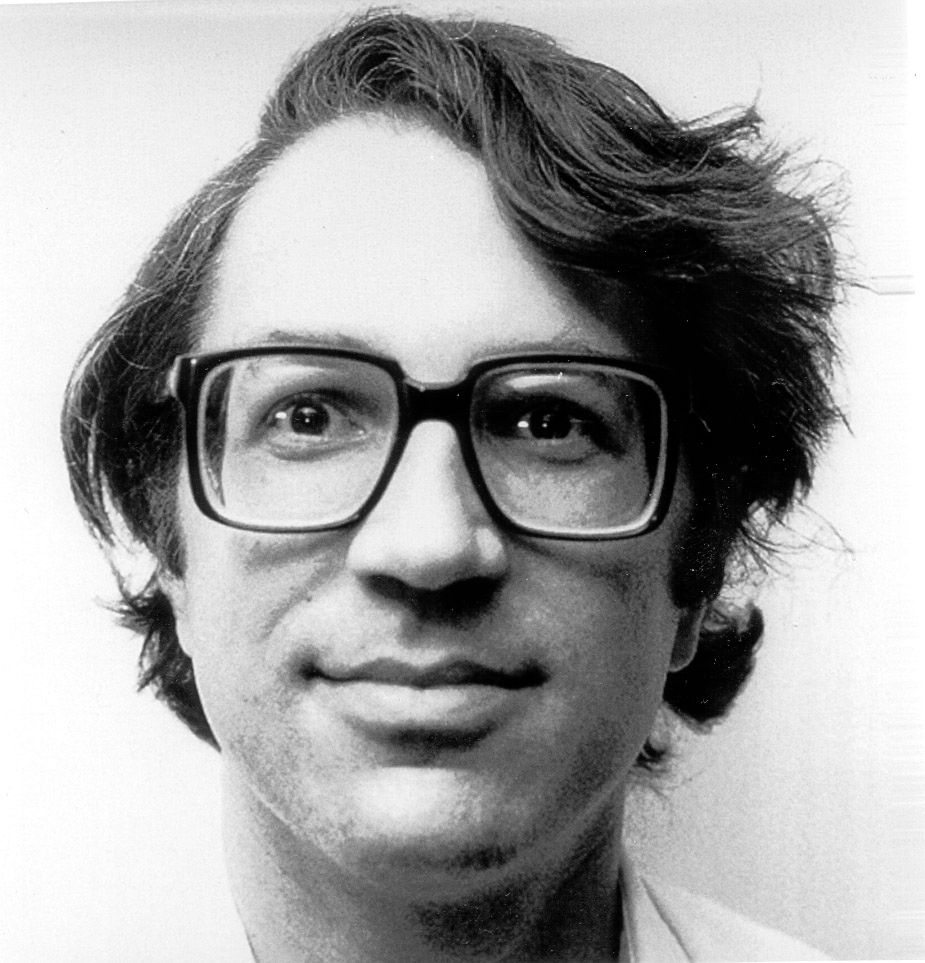
Take a good look, because if you had worked at Bell Labs in the 1980s, you would have seen this face everywhere. On T-shirts. On coffee mugs. On an org chart. On a water tower. Inside microchips. Under the cement floor. On the cover of a technical journal. In your text editor. And, if you use Plan 9 today, possibly on your screen right now, without knowing it.
This is Peter J. Weinberger, PJW to his friends, and this is the story of how one innocent portrait became the most famous face in the history of Unix. I found it on a page kept by Gerard Holzmann, one of the Bell Labs researchers, and it's one of the most delightful things I've ever read about computing history.
Who is Peter? #
Before he became a meme, Peter Weinberger was (and still is) a serious computer scientist. He's the W in AWK, the text processing language he created with Alfred Aho and Brian Kernighan in 1977, which still lives inside every Unix system on the planet. There's also a classic string hashing function named after him, the PJW hash, which you can find in compiler textbooks and in a lot of old C code.
In the early 1980s he was promoted to department head at the Computing Science Research Center at Bell Labs, the legendary group where Unix and C were born. And that's where the trouble began.
A portrait, carelessly left around #
Holzmann tells the story in his book Beyond Photography: The Digital Darkroom, from 1988, where Peter's face was used as a guinea pig for image editing experiments. In his words, Peter was "careless enough to leave a portrait of himself floating around."
On a goofy Saturday evening at the lab, Holzmann and Rob Pike (yes, that Rob Pike, later of Plan 9 and Go) started making photocopies. To celebrate Peter's rise in the hierarchy, they took the official chart of the Bell Labs Cabinet and pasted his face into every single box.
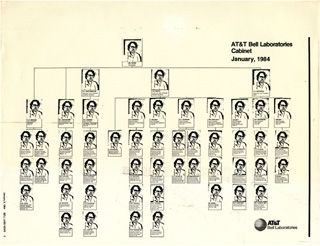
Peter, wisely, decided the best strategy was not to react at all. It didn't help.
The logo #
Around that time, AT&T revealed its new corporate logo, the striped globe. Within a few weeks, Tom Duff had made a version of it out of Peter's face.
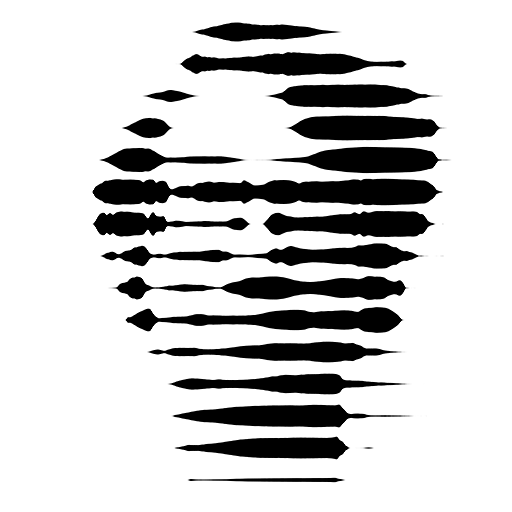
It's genuinely good design, and it became the unofficial symbol of the whole research center. Rob Pike had T-shirts made. Ken Thompson, co-creator of Unix, ordered coffee mugs with it. From there, things escalated.
The water tower #
Peter had hoped to at least avoid seeing his face ten feet high on a water tower. On the night of September 16, 1985, his face appeared ten feet high on a water tower near the lab.
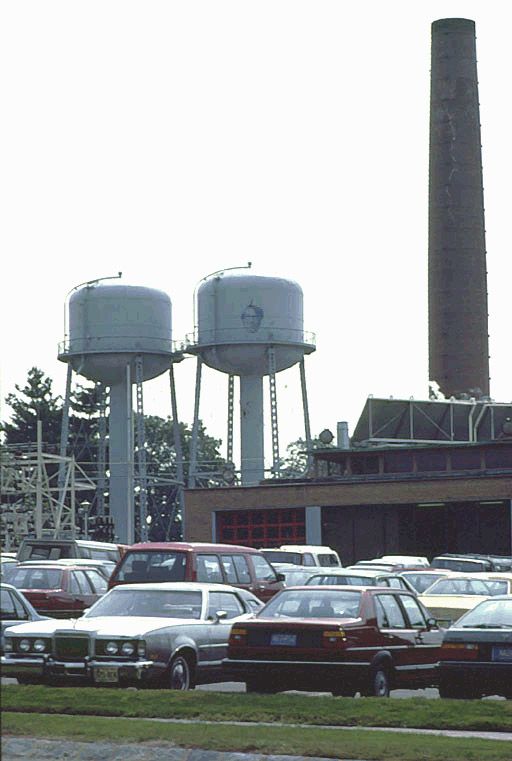
This is the only known photo of it. Plant management painted over it within a day. Nobody knows for sure who did it. It was done with a big template and spray paint, and here's my favorite detail of the whole saga: the paint was later filed as a business expense by Fred Grampp, on behalf of an employee named G.R. Emlin. Grace Emlin. Login: gremlin. She didn't exist, but she had been successfully entered into most of Bell Labs' official databases, and she even received mail at her mailbox in the Unix room.
Hidden everywhere #
After the water tower, the face went underground. Literally.
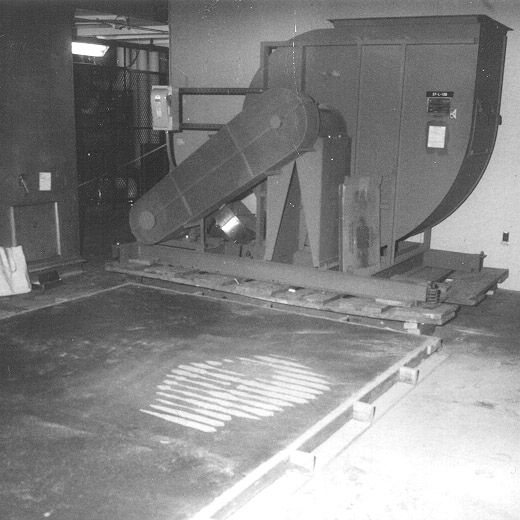
When new machinery was being installed in the buildings, Norman Wilson pressed the PJW logo into the freshly poured cement with a stencil. Something big and heavy was installed on top of it a few days later. Years after that, the same slab ended up under the offices of the Bell Labs PR department, whose occupants almost certainly had no idea who was staring up at them.
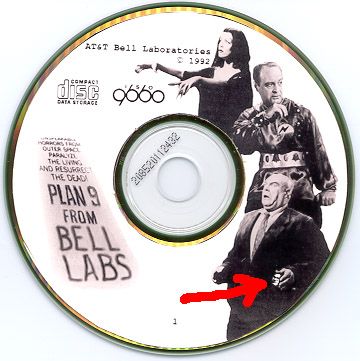
The researchers also designed microchips, so of course Peter's face ended up hidden in the layout of some of them. It was tucked as a tiny hidden image into every CD cover they produced. On the original Plan 9 CD, one of the characters printed on the disc is holding a little PJW face. Follow the red arrow:
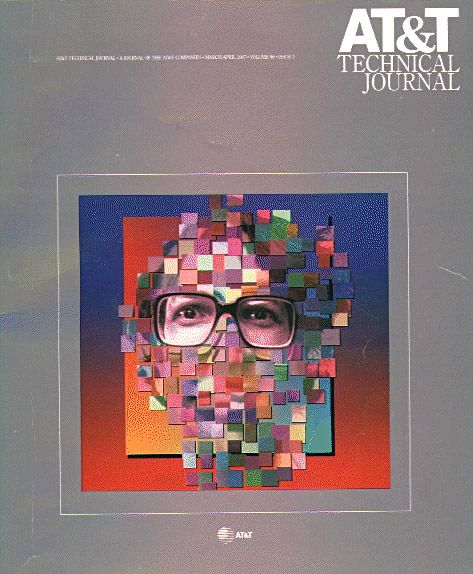
And it went mainstream, in a nerdy way. A transformed version of the face made the cover of the magazine Computer Graphics in November 1985, and another one landed on the cover of the AT&T Technical Journal in March 1987. Imagine being the editor who approved that one.
A short list of other places Peter showed up #
Holzmann's page has a list that reads like a fever dream:
- The disabled access sign outside a men's room, with Peter's face spliced in.
- The elevator floor indicator for the 5th floor, home of the original Unix room, briefly replaced by Peter.
- The screen saver of the early Blit terminals: the PJW logo and a kicking donkey, scanned from Eadweard Muybridge's famous photo sequences.
- Painted on the wall of a sysadmin's office.
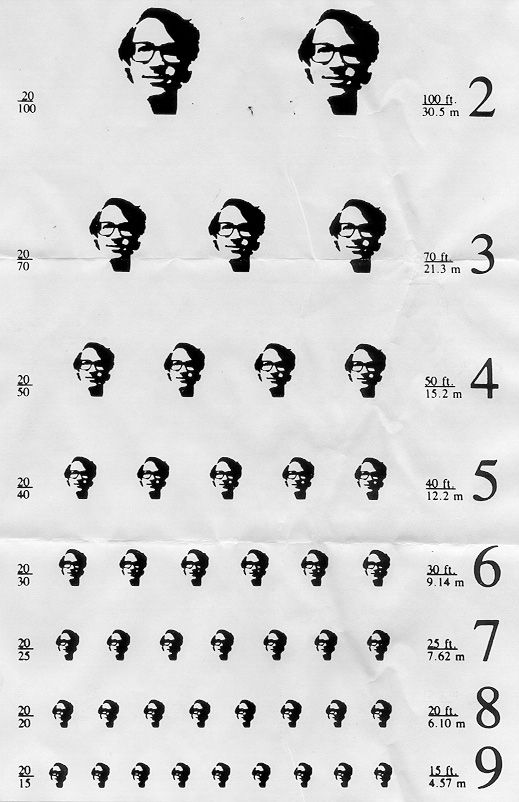
- A special PJW symbol added to the troff typesetting system, which naturally led to a PJW eye chart.
- When Peter was promoted to vice president, hundreds of paper masks of his face were handed out at the entrance of a lab-wide meeting. When he took the microphone, the whole auditorium put them on at once.
- The team made a plaster cast of his face (with his permission, this time) to experiment with 3D rendering. The original plan was to replace the bust of Alexander Graham Bell in the lobby with it on April Fools' Day. They wisely didn't.
- That cast was later used to make PJW out of solid Belgian chocolate, when Norman Wilson left Bell Labs in 1990. Peter paid for the chocolate.
- When Rob Pike left for Google in 2002, the farewell cake had Peter's face on it, of course.
The magnets #
When Peter himself left Bell Labs, around 1996, a rendering of his face about four by four feet appeared on the metal wall of a stairwell, built entirely out of small round magnets.
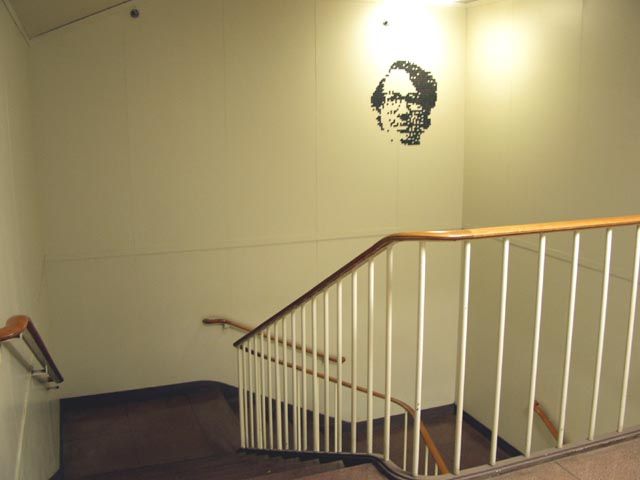
It was still there years later, slowly losing magnets, like a monument quietly eroding.
He's probably on your computer #
Here's the part that turns a funny office prank into something lasting. Rob Pike's text editor, sam, shows the PJW face in its corner. Newer versions also use it to draw characters it doesn't recognize.
And in Plan 9 (and 9front today), whenever a font is missing a character, the system draws a tiny PJW face instead of the usual empty box. If you cat a file with weird bytes on Plan 9, Peter looks back at you. The old mail notifier program on the research machines, faces, also showed his face whenever it didn't have a picture of the sender.
So the face that started as a joke on a Saturday night ended up as part of an operating system, quietly filling the gaps where something is missing. I can't think of a better tribute to a group of brilliant people who never took themselves too seriously.
Thank you, Peter, for being such a good sport for forty years. And thank you to everyone at Bell Labs who kept this story alive.
Sources #
- PJW's Face, by Gerard Holzmann, where all of these pictures come from
- Beyond Photography: The Digital Darkroom, the book that started it
- PJW hash function on Wikipedia