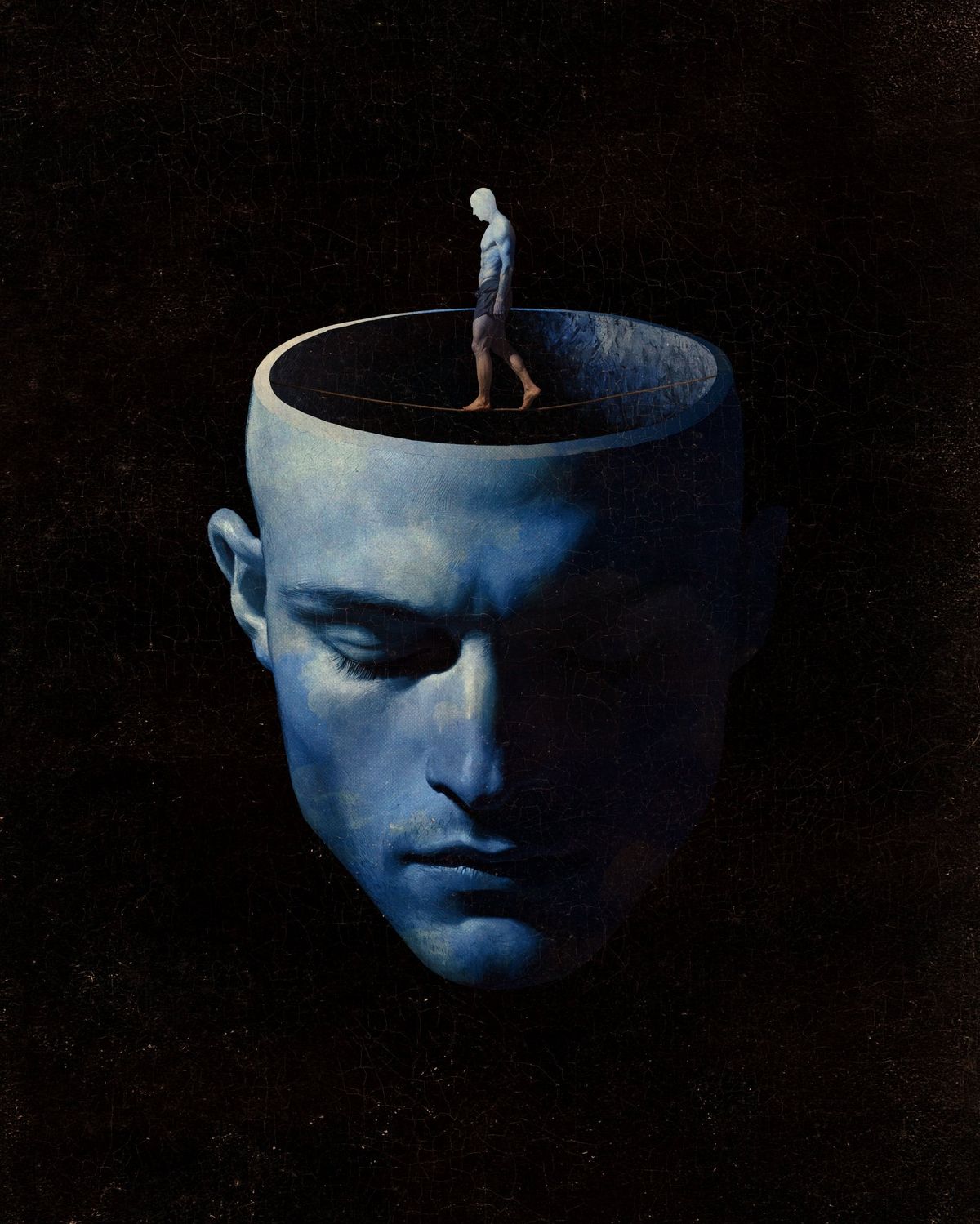

The Web We Lost
In the beginning, the indieweb felt strange to me.
I was used to the websites and services of large companies. Until then, the furthest I had dared to venture into decentralization was something involving blockchains. But there was something inevitably robotic about all of it. It felt almost like eating canned food: it feeds you, it does its job, but you know it is not natural. That was the feeling I had toward big tech.
The first time I accessed the internet must have been sometime between 1994 and 1996. Back then, the internet was still a strange concept to me. I was a child already fascinated by computers, and my favorite games were Duke Nukem, Doom — my parents had no idea what that was, thankfully — encyclopedia games, and those CD-ROMs that came bundled with magazines.
And none of that made the experience any less exciting. Quite the opposite. The internet had opened an entire ocean of possibilities.
In my city, I used a US Robotics modem, probably something around 32 kbps — which, obviously, was never actually delivered in full. I remember that the first messenger I used was ICQ. Later, around 1999, with the arrival of BRASNet, one of the largest IRC networks of the time, I eventually migrated to IRC.
My first websites could not have been anything else: they were hosted on CJB.net and GeoCities, already under the shadow of the Yahoo! megacorporation. And just like mine, there were thousands of others. They were personalized, deeply imperfect websites, but they carried the face of their creators. Mine, in particular, had several dancing skulls scattered across the screen and a pile of nonsense aimed at horror and terror fans.
It is curious to think that Netflix had already existed for two years when I finally published my first website — not, of course, in the form we know today.
But then everyday life knocks at the door. Chores arrive. Responsibilities pile up. And we become lazy.
I think a large part of Google’s power was born precisely from the laziness of the average user: the promise of making easy what perhaps should have remained the bare minimum required effort. By around 2010, the large companies had already taken their definitive shape. They buried services, standardized experiences, and turned the person who once had a highly customizable website into just another numbered user.
We became standardized numbers inside big tech.
I stopped being Pablo and became user_some_random_number. At least in support tickets, that was how I was identified: by a number.
That was what led me to my first real search: what was left of the internet that did not share Google’s algorithm?
I confess I used Perplexity to escape those algorithms a little. At the time, I still did not know Kagi.
The AI listed fifty websites for me. The first was Space Jam, that wonderfully deranged website from 1996. Then came many others.
And with every site I opened, there was a discovery. There was a feeling. Something I could no longer easily find out there.
I began researching more. I started stumbling upon services like Neocities, with its endless customizations, crooked ideas, homegrown frameworks, and tiny personal obsessions. And that feeling kept expanding. Something I had never truly valued before began to take shape inside my chest.
It was the fediverse.
One thing led to another, but I will unpack that slowly.
My first experiment was Weirdnet:
The idea was simple. I wanted to find a way to gather as many links as possible in one place. Not exactly a search engine, but something curated, chosen by hand — or, at the very least, scraped from trustworthy sources. That was how Links and Directory were born:
I started with around thirty links. Little by little, it grew. Today, I genuinely consider it an excellent collection. I have countless links gathered there, but I still felt unsatisfied. I wanted to extract more. I wanted to find communities.
And the more I searched, the more interested I became.
Man, Neocities websites gave me a good feeling. They were full of handmade artifacts, built with few resources, but loaded with intention. And then, out of nowhere, I stumbled upon tildes. I was impressed to find pubnixes alive and well in 2025. I got excited and sent in my application — to which, unfortunately, I never received a proper response.
Then, as tends to happen in these labyrinths of the internet, from tildes I stumbled into omg.lol. And it was love at first sight.
At first, I did not have time to explore everything. But there was a similar logic there: identity, community, simplicity, presence. Some time later, I remembered my registration and returned. And, in truth, I found there the best community — and by far the most welcoming one. That was where I decided to stay.
The fact is, without dragging this out too much, there is an entire decentralized world out there waiting for new explorers and creators. The world does not revolve around big tech — nor should it. You should have custody of your own data. You should be the maintainer of your own infrastructure, as it was in the beginning.
Unfortunately, we live in a society too lazy to create and too obedient to question. But maybe that is exactly why the indieweb still feels so alive: because within it there is still friction, imperfection, authorship, and human presence.
And today, that is worth gold.