
A winter chronicle of chance, strangers, and freedom
I had been in Munich for almost ten days. I had gone there with a mission that, in my early twenties, felt perfectly serious: to backpack across Europe as if life were my own private, colder, slightly less irresponsible version of the 2004 film EuroTrip.
Winter was beginning to harden the old continent. The city had surrendered to a palette of white, gray, and cold light. From the top of a park in Munich, still dotted with the Christmas decorations of 2008, I watched that brutalist, almost Bauhaus Germany with a kind of beautiful anguish I did not want to refuse. It was beautiful. Absolutely beautiful.
Munich was my anchor point. Gladston lived there, an old Brazilian friend who had gone to Germany to study. I knew him from other times, other nights, other circles. Gladston was a singular creature — and I say this without decorative exaggeration. At the time, we were more or less the same age, but he seemed to carry a parallel life, full of small secrets and private performances.
Perhaps I was one of the few people who knew one of his more eccentric sides: his desire to have a “master” who would command his life. He told me these things because, one way or another, I had already discovered them. The curious part was that, despite this almost theatrical desire to be controlled, Gladston never truly abandoned the throne. He was a fetishist of control in reverse: a rich man wanting to play at submission without ever giving up power. But that is another story. Let us stay with Prague.
During those days, I barely saw my friend. He was taking exams at the university. He left the house around eight in the morning and, most nights, returned only after nine. That gave me enough time to explore Munich alone, my hands buried in my pockets, my face cut by the cold, and a kind of nostalgia I still did not know how to name.
It went on like that for almost nine nights. The white light on those rigid buildings gave me an anguish that, strangely, I knew how to admire. But on the tenth day, something in me asked for motion. I needed a city more vibrant, more voluptuous. I needed to escape Germany.
It must have been around three in the afternoon when I decided to leave. Gladston had three travel guides on his shelf. Without ceremony — and with all the ceremony that childish rituals possess — I chose between them by chance. The chosen destination was Prague. Yes, that old lady of the Czech Republic. Chance, that day, was generous to me.
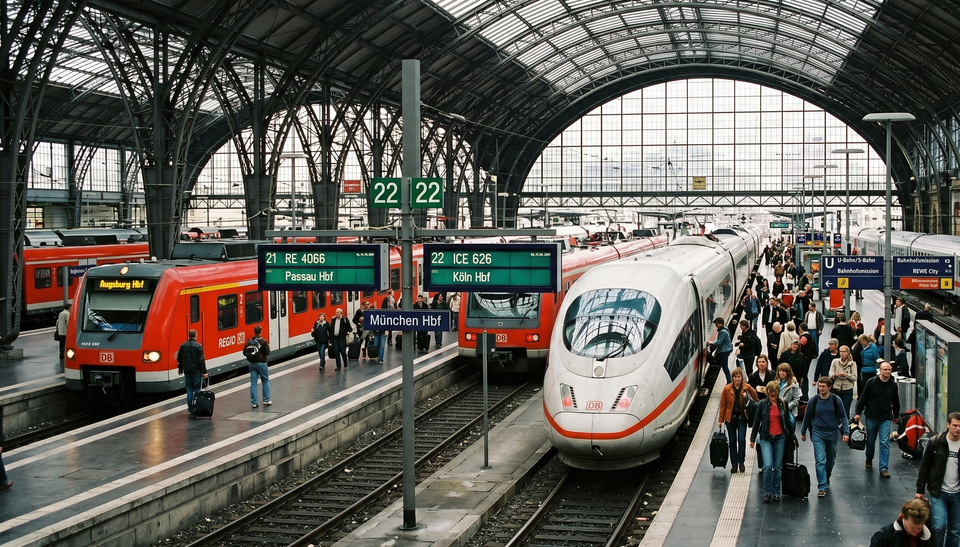
I left Gladston a note, thanking him for the stay and telling him I was leaving. He would probably read it only hours later. I grabbed my backpack, put on my coat, and went to Munich Central Station. I bought my ticket to Prague and walked through the platform in a state of ecstasy. Beautiful trains stood everywhere: technological ICE trains, shining machines, metallic promises of departure.
Then I reached the spot printed on my ticket. Out of the mist came my train. It was not exactly the triumph of German engineering I had imagined. It looked more like an old Eastern European train — almost a steam train, the kind that evokes childhood, small towns, and poetic rust. Far from reducing my excitement, it made everything better. I was alone, without a cell phone, at a time when social networks were still learning to crawl. I was free.
I boarded the carriage and went straight to my compartment. There I discovered that adventure did not come with heating, nor with enough light to read in that dark late afternoon. Naturally, I seemed to have won the lottery: only my compartment was like that. There was a man in uniform, apparently a police officer, and two other people who looked as if they were returning from work. I realized that this was not merely an international train to Prague. It was also the daily transport of tired people moving between cities, shifts, and obligations.
I spoke a little with the police officer, but the cold was so intense that I could barely pay attention. Gradually, he got off, the others did too, and I was left alone on the train advancing toward the Czech Republic.
Soon an elderly, very well-dressed gentleman entered the compartment. He sat across from me and, for several minutes, did not say a word. He looked as if he were fleeing something. Then he greeted me in perfect English, although marked by an Eastern European accent I could not help noticing. His name was Peter.
Once the conversation began, it found its own rhythm. We spoke about Czech writers, music, culture, anything that could involve the Czech Republic. Peter had elegance, humor, and a quiet curiosity. At some point, I asked what he had been fleeing when he entered my compartment. He answered, with delightful comic timing, that he had abandoned his own compartment because the young woman traveling there had an unbearably dull conversation. And so, through someone else's boredom, Peter appeared in my journey.
Then a third man entered. Bald, strong, with scars on his face, very well dressed in a wool coat. He sat with us and remained silent for almost an entire hour. Peter and I pretended to be natural, but it was impossible to ignore that presence. The man had an intimidating appearance, the sort that turns any narrow compartment into a small theater of suspense.
Then, suddenly, he entered the conversation like thunder. He spoke the cleanest English I had heard on the whole trip so far. Unfortunately, I no longer remember his name. Peter, however, looked at me with alarm, as if his eyes were saying: be careful.
Hours later, I felt like smoking a cigarette and mentioned it to my travel companions. The bald man offered to take me to a part of the train where it would be possible to smoke. I accepted. Peter looked visibly perplexed. His eyes seemed to ask how I could go alone with that stranger, especially that stranger, into some dark corner of an old train in the middle of a European winter.
We entered a small bathroom. He closed the door and, with a facility that seemed absurd to me, removed the handle. The man was strong. Very strong. He sat on the toilet, and in that instant I thought: well, now I die. There was no dramatic music, no camera cut, only me, a tiny bathroom, a scarred man, and the door handle out of place.
But I did not die. We talked. And we talked a lot. We spoke about the women of the Czech Republic, Brazilian football — although I have never exactly been an authority on the subject — politics, travel, books, everything. Behind that brutal appearance, the man was immensely cultured. There was an unexpected, almost delicate intelligence hidden beneath a surface of menace. Life, when it wants to humble us a little, does this: it dismantles our certainties with a good conversation inside a train bathroom.
When we returned to the compartment, my fear had diminished to almost nothing. Peter was still perplexed, sitting in the corner, trying to understand how I could be so calm. I nodded to tell him everything was fine. As the hours passed, the three of us found a rhythm together. One distracted the other, and the journey, which could have been merely cold and uncomfortable, became strangely amusing.
At a certain point, the bald man told me he would get off before Prague Central Station. His boss was waiting for him; he was the man's driver. He asked whether I would like to go with him and take a ride into the city, promising to drop me wherever I was staying. Peter looked at me once more with the alarmed expression of someone watching a man play with a match inside a powder magazine. I declined politely. The man pulled a few cards from his pocket, gave them to me, and said that if I needed anything in Prague, I could call him. We said goodbye, and he went on toward his destination.
As we approached Prague's great old station, Peter asked if I had money to use in the city. I answered with the idiotic confidence of the unprepared that yes, of course I did: I had euros. Peter looked at me with an almost paternal disappointment. He explained that in Prague the currency was the Czech crown. I had none.
He then offered me shelter. He said his family would be waiting at the station and that I could spend the night at his house, continuing my journey the next morning. I refused. Peter, without much discussion, opened his wallet, took out some Czech crown notes — which seemed like a lot to me — and placed them in my hand. I asked why he was doing that. He said he could not leave me without money on that trip.
I thanked him as best I could. He gave me his addresses, his email, and told me to reach out if I needed anything at all. Then he hugged me and said goodbye. It was the last time I saw dear Peter. Years later, in 2013, I discovered that he had died. He had stopped answering my emails, and one of his sons had taken over that inbox. The news filled me with sadness. I remembered that good old man, who had appeared by chance on a cold train, and his generosity without spectacle.
I got off in Prague with my backpack, a few crowns in my pocket, and the feeling that the journey had already justified itself. Still inside the station, I noticed a very well-dressed man about my age watching me. He wore a suit and seemed to be trying to decipher my next move. He approached with a smile and asked whether I knew where he could exchange euros for crowns.
I understood immediately: here was another careless traveler, someone who, like me only minutes earlier, had not prepared for the local currency. I took half the money Peter had given me and handed it to him. The man asked where I was staying. I told him the truth: I did not know.
He then said he was going to a hostel and that, if I wanted, I could accompany him. He introduced himself as Ahmed, a Turk. And so we went together, two newly arrived foreigners crossing Prague station as if entering both a city and a story.
That train journey alone would have been enough. It was one of the greatest adventures I ever lived: cold, improvised, absurd, human. Munich had given me the beautiful anguish of white lights. Prague was beginning to offer me something else: chance in its most elegant form, walking beside me in a suit, with a backpack and a foreign accent.