
No Gods, No Kings
The other day, I was watching podcasts featuring the Brazilian writer Jan Val Ellam (the pseudonym of Rogério de Almeida Freitas). I like him a lot, despite not believing in the spiritual and cosmicist theories he explains in the form of “spiritual gossip.” However, Jan seems very lucid and confident about what he says, which makes me pay attention, even though I disagree with many things, as I have already said.
He always brings up very interesting theological and technological reflections that, in the end, would make excellent fiction books.
But I cannot deny it: reality, first, is shaped in fiction.
I am not going to go deeply into the general points discussed by Jan, but rather into factual things that are widely known throughout history: the theology of religions.
Jan claims to have studied more than 100 religions in depth, and while that is curious, it is neither impossible nor unlikely. The knowledge he expresses can be compared with and verified through the literature.
He even makes a very interesting connection between religions, stating that almost all of them have some form of the trinity. Interesting, right? And throughout the conversations, he keeps showing this. How humans recognize God and how the trinity makes itself present here and there, sometimes indirectly. And it is not even because of syncretism.
The fact is, one word caught my attention, and it was the word “all” in the phrase “all religions.”
So I began researching Western and Eastern religions, with the intention of finding one in which deities, gods, or supernatural influences in general do not exist.
And look, none of what I researched or studied was in-depth, but I started from what seemed to me to be the most sensible beginning, which was the religion of ancient Egypt (and yes, I know it is not the first documented religion).
Hehe, I should mention that it was during this research that I discovered the existence of two cities called Thebes. One in Egypt and another in Greece. And I discovered that the myth of Oedipus and the Sphinx is Greek, even though the Sphinx is Egyptian. Pretty crazy, isn’t it?
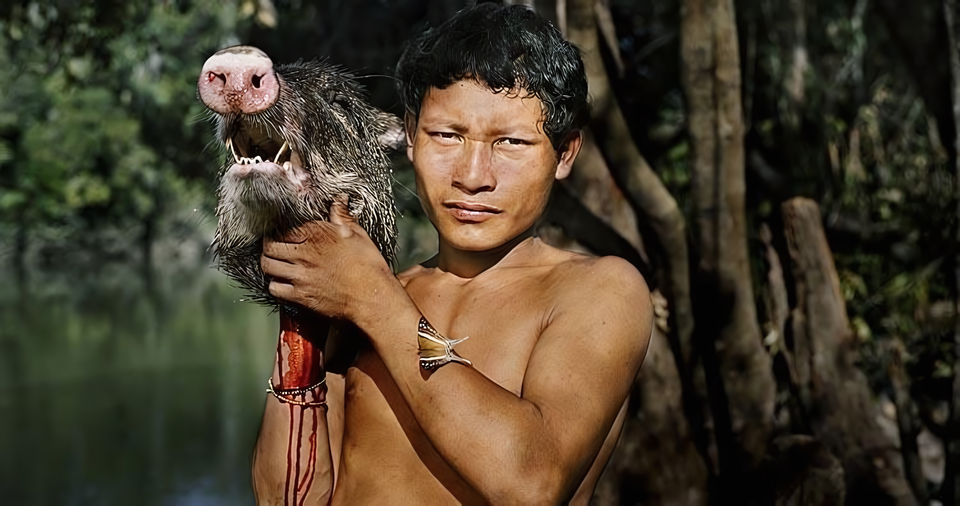
Anyway, setting aside my pauses for reflections and daydreams, I surprisingly found this culture without deities in Brazil: the Pirahã people, located in the Brazilian Amazon. These people were studied extensively by the linguist and anthropologist Daniel Everett.
The Pirahã people are widely cited as perhaps the only non-theistic culture in the world. Look how interesting: they have no creation myth, they do not believe in any supreme or creator god, they do not pray, and they have no religious hierarchy. They believe only in what they can see or in accounts from people who witnessed something directly.
Then I wondered how these people viewed death, and the answer was even more interesting: “the Pirahã people are strictly focused on empirical experience and the present; they have no mythologies about heaven, hell, or reincarnation.”
So when a person dies in the village, death is pragmatically accepted as a biological fact of the natural world.
The Pirahã people have NO kind of myth whatsoever.
It is a culture shaped through direct testimony.
I think modern human communication would be more effective if it were based on the Pirahã people.
Anyway, just a late-night reflection.
Some random data:
* Cosmicism, in the Lovecraftian sense, is basically the idea that the universe is so vast, ancient and indifferent that humanity means absolutely nothing to it. There is no promise that reality was made for us, no guarantee that it is understandable, and certainly no reason to believe that whatever exists beyond our little corner of existence would care about us. In Lovecraft, the horror often comes from discovering too much, because the closer a person gets to understanding what reality really is, the more fragile human ideas like importance, order, morality and even sanity begin to look.
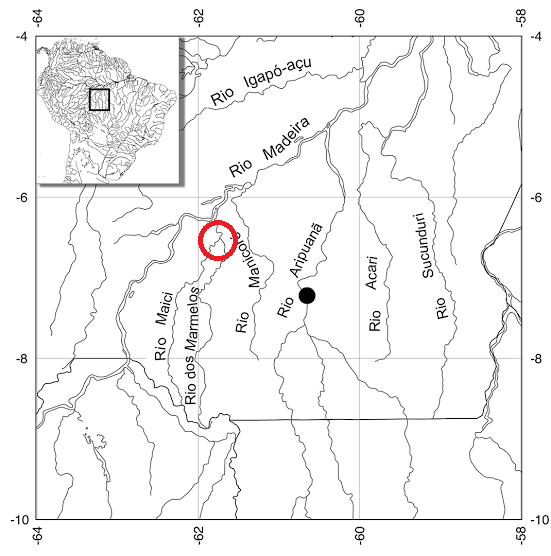
The Pirahã people have an estimated population of between 800 and 900 people. They live in villages located mainly along the Maici and Marmelos rivers, in the state of Amazonas, Brazil.
That's it. Thank you.