
Saw That II: Napoleon Dynamite
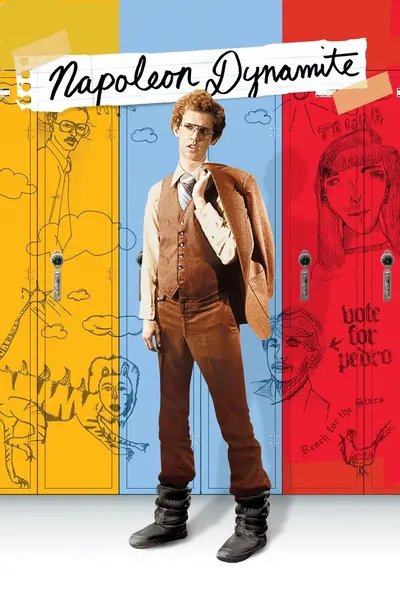
- year
- directed by
- written by
- Jared Hess, Jerusha Hess
- starring
- Jon Heder, Efren Ramirez, Tina Majorino, Aaron Ruell
- photography
- Munn Powell
- music
- John Swihart
- runtime
- 1h 35m
- genre
- comedy
- from
- United States
He's out to prove he's got nothing to prove.
I rewatched Napoleon Dynamite, a film I find impressively good and a little uncomfortable, because I grew up in a small town full of singular characters. How it was made with almost nothing, why its tiny dreams are so funny, and what it got right about small places.
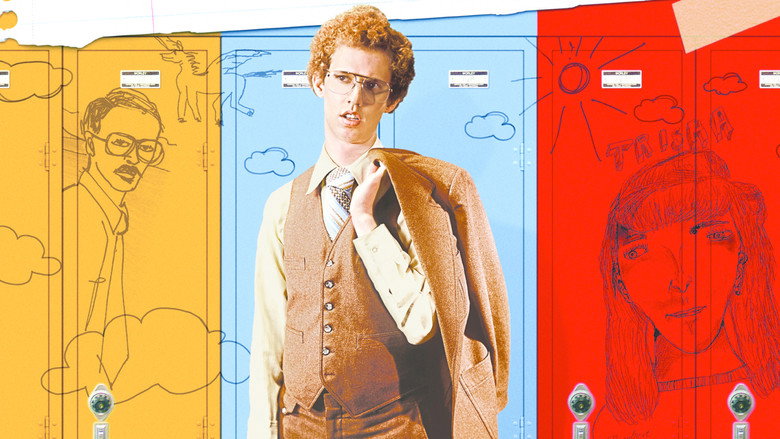
I rewatched Napoleon Dynamite today, a film I find impressively good. The whole thing gives me a strange feeling, because I lived in a small town full of singular characters, and the film knows that kind of place very well. And I find the characters' small aspirations extremely funny.
What it is #
Napoleon is a tall, awkward high school kid in Preston, Idaho, a farm town near the Utah border. He lives with his grandmother and his older brother Kip, who spends his days in internet chat rooms. When Grandma breaks her tailbone in a quad bike accident, their uncle Rico moves in to look after them, in the camper van he lives in, and starts selling junk door to door. At school Napoleon makes two friends: Deb, a shy girl who sells glamour shots and keychains to save for college, and Pedro, a quiet transfer student from Juárez, Mexico, who decides to run for class president against the most popular girl in school.
That's about all the plot there is, and the film is in no hurry with it. It was Jared Hess's first feature, written with his wife Jerusha, and it stars Jon Heder as Napoleon, Efren Ramirez as Pedro, Tina Majorino as Deb, Aaron Ruell as Kip and Jon Gries as Uncle Rico.
Made with almost nothing #
The film started as a class project. In 2002, Hess and Heder were film students at Brigham Young University, and together they made Peluca, a nine-minute short in black and white on 16mm, about a nerdy high school kid named Seth.1 It played at the Slamdance festival in 2003, and the producer Jeremy Coon convinced Hess to drop out of school and turn it into a feature.
Many casting directors who read the script found it too weird. One of them suggested Jake Gyllenhaal for the lead, but Hess wouldn't make it without Heder, who was paid $1,000 to play Napoleon and only negotiated for more after the film became a hit. Hess shot it in Preston in July 2003, in 23 days, with a budget of $400,000. Locals gave the crew places to sleep and food to eat, and there was so little film stock that most scenes got only a few takes.
It premiered at Sundance on 17 January 2004, Fox Searchlight bought it there, and Paramount and MTV Films came in to release it outside North America. In less than a year it made about $44.9 million, more than a hundred times what it cost.
A town with no year #
One of the strangest things about the film is that you can't tell when it happens. Kip connects to the internet by dial-up, Napoleon listens to tapes on a Walkman and wears moon boots, Deb has a side ponytail, the school dance plays Alphaville's "Forever Young", and Rico drives a 1975 Dodge van. It all looks like the eighties, and then a chat room shows up.
That was on purpose, and it came from Hess's own childhood. When the studio's marketing people asked him to make clear that the story was happening now, he explained that in a small town in Idaho things are functional and fashion doesn't matter much. The studio still wanted a date, so the opening titles show Napoleon's student ID with the 2004–05 school year on it.2
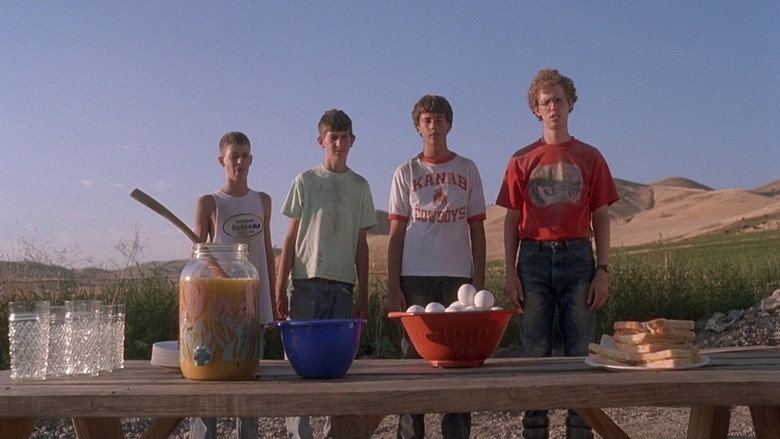
Anyone who grew up far from a big city knows this. Small towns don't live in a year. They live in a mix of whatever arrived and whatever never left: the TV from one decade, the car from another, the haircut nobody bothered to change. The film gets that right without ever pointing at it.
How it's shot #
Hess and his cinematographer, Munn Powell, keep the camera still and put people in the middle of the frame, often looking straight ahead, as if they were posing for a family photo they didn't want to be in. Look at Rico, Napoleon and Kip on the couch, lined up between two matching lamps:
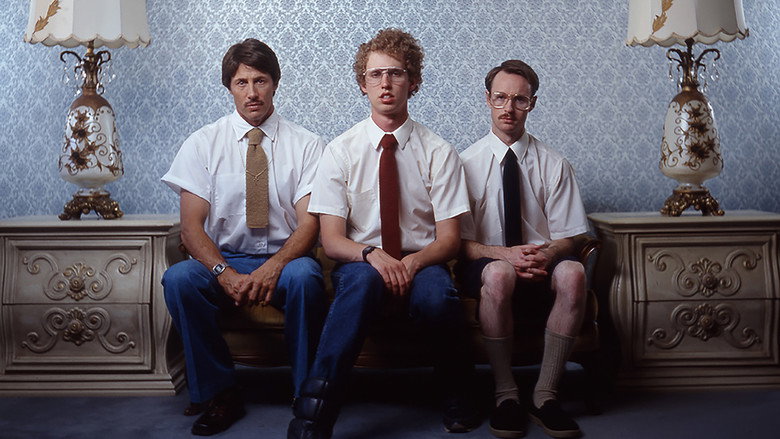
The comedy works the same way. Nobody in the film knows they're funny, and the camera never winks at you. Heder plays Napoleon with half-closed eyes, a mouth that hangs open and a voice that barely rises, even when he's furious. The jokes come from the pauses, the long silences after somebody says something absurd and the scene just keeps going. That's what people mean by deadpan, and the film commits to it so completely that some viewers find it unbearable and others can't stop quoting it.
Roger Ebert was in the first group. He gave it one and a half stars and wrote that the film makes no attempt to make Napoleon likable. He had a point: Napoleon is rude, selfish and lies about everything, from his "skills" to the wolverines he says he hunted in Alaska. That may be the most honest thing about him. Real people in small towns aren't written to be likable. They just are who they are, all day, in front of everybody.
Small dreams #
What I find funniest is how small everyone's dreams are, and how seriously they take them.
Uncle Rico wants to go back to 1982, when he's sure that if the coach had put him in, his team would have won state and his life would have gone differently. He and Kip even buy a time machine off the internet. Kip spends hours a day in chat rooms with babes and is training to be a cage fighter. Deb's business plan is glamour shots and handmade keychains. Napoleon wants a girl to go to the dance with and wants everyone to know about his nunchuck skills, his bow hunting skills and his computer hacking skills. Pedro's whole campaign promise fits on a T-shirt.
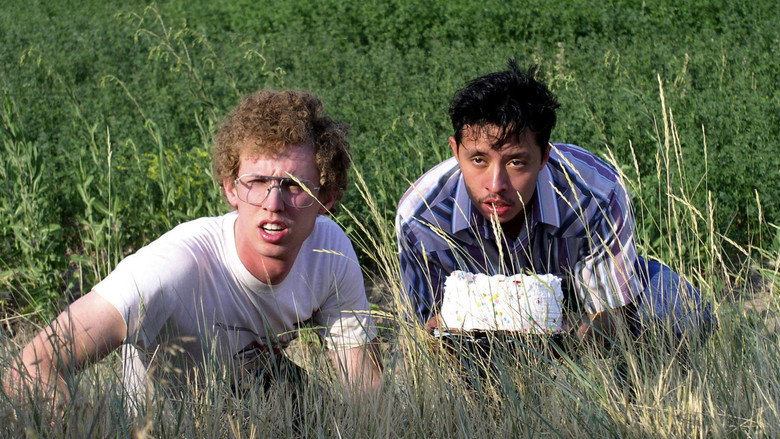
The film never tells you these dreams are too small, and it doesn't make fun of the people who have them, either. A school election is treated with the same weight a bigger film would give a war. That's where most of the laughs come from, the distance between how big it feels to them and how small it looks to us. It's also why the film doesn't feel cruel. Hess has called it "so autobiographical": he grew up in Preston with five brothers, and he said Napoleon is a mix of the nerdiest and most awkward parts of all of them.
Why it hits close to home #
I grew up in Soledade de Minas, a town in the south of Minas Gerais with a little under 6,000 people.3 Like every town that size, it has one main street, and basically every street leads to the small church. It's surrounded by valleys.
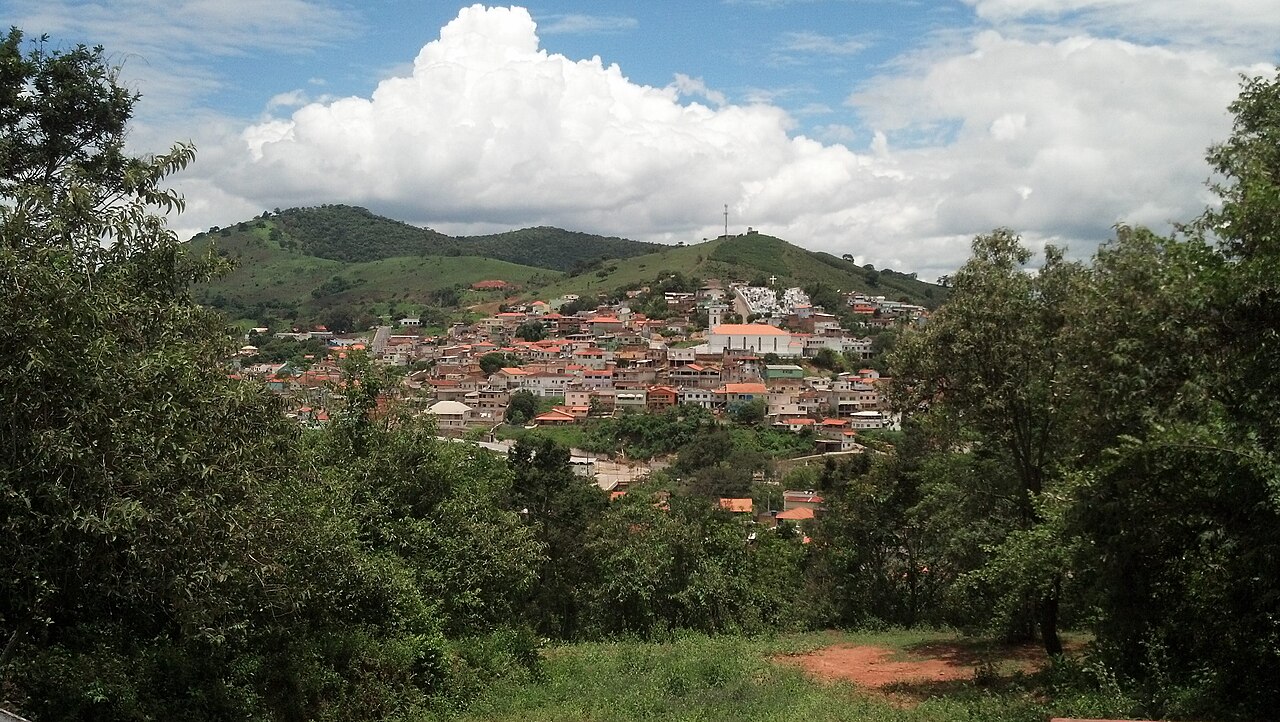
There was even a curfew there during Lent, against werewolves.4 The town had its crazy characters, bohemian poets, and people for whom that wonderful place was their whole world. When I watch Napoleon, Pedro, Deb, Kip and Rico, I'm not looking at strangers. That's where the strangeness comes from for me: the film is funny, and at the same time it's a little too close.
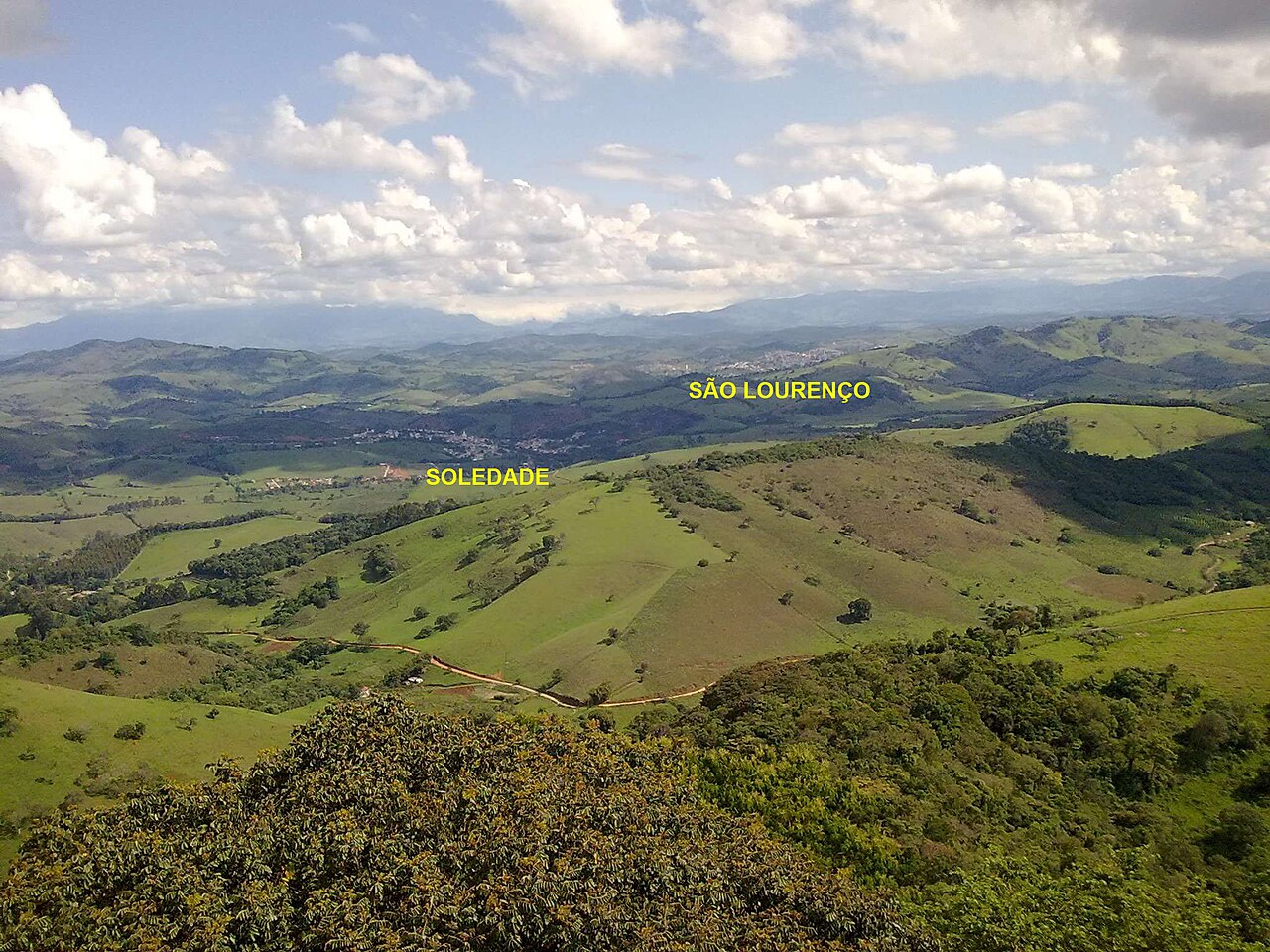
Preston and Soledade have little in common, from the language to the landscape. And still the same types turn up in both: the uncle who never got over his best year, the brother with big plans that never leave the house, the kid who brags about skills nobody has ever seen.
Spoilers from here #
Spoiler warning: this section talks about the end of the film, including the scene after the credits.
The election comes down to a school assembly. Summer, the popular candidate, gives a polished speech and puts on a dance number to the Backstreet Boys with her friends from the Happy Hands club. Pedro gives a short, flat speech, and then finds out he's also expected to perform a skit. He has nothing prepared.
So Napoleon walks up, hands a tape to the man running the sound, and dances alone in front of the whole school to Jamiroquai's "Canned Heat". He's been practicing in secret with an instructional video, D-Qwon's Dance Grooves. When the music ends, the room is quiet, and then everybody stands up and cheers. Pedro wins.
Heder understood what the scene was for. He said it wasn't just a silly dance, it was the moment Napoleon sacrifices himself for his friend, the thing the whole film builds up to. The boy who has lied about every skill he has finally shows a real one, and he uses it for somebody else. He improvised it, with help from Tina Majorino and moves borrowed from Saturday Night Fever, Michael Jackson and Soul Train. They shot it at the end of production with only one roll of film left, about ten and a half minutes, so he danced three times and they cut the best parts together.5
The rest of the ending is just as modest. Grandma comes home, Rico gets back together with his girlfriend, Kip leaves for Michigan with LaFawnduh, the girl he met online, and Napoleon and Deb make up and play tetherball. Nobody's life changes much. They just got through it.
After the credits, there's one more scene, two months later: Kip and LaFawnduh's wedding, in a field, with Napoleon riding in on a horse he tamed for them.
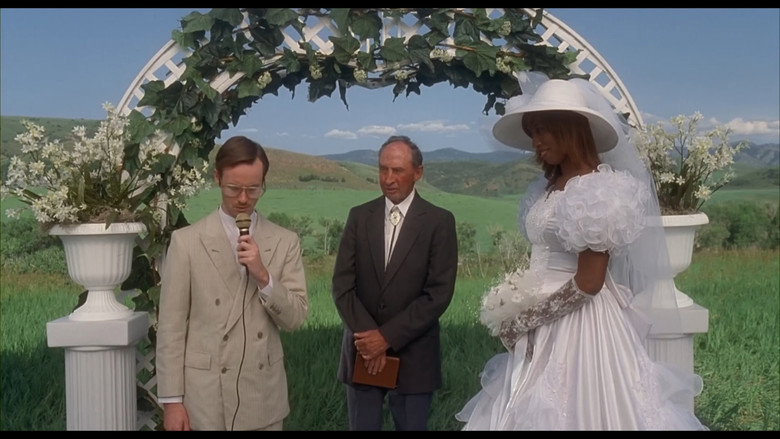
That scene came later. After Fox Searchlight bought the film at Sundance, the studio put up the money to shoot it.
The New York Times liked the film but thought its resolution came too easily. Seen from a small town, it looks more like accuracy. In a place like Preston, or Soledade, a good ending isn't leaving town or getting rich. It's a friend who wins, a brother who gets married and a game of tetherball with someone who forgave you. That's as big as things get there.
Things I learned afterwards #
- A name from the street. Hess said he took the name from a man he met around 2000 in Cicero, Illinois, while he was a Mormon missionary. Elvis Costello had used "Napoleon Dynamite" as an alias since the early eighties, and he still believes the name came from him. Hess said he only found out two days before the end of shooting, from a teenage extra, and called it an embarrassing coincidence.
- The most expensive song. The production wasn't sure it could afford Jamiroquai, so Heder also danced to another Jamiroquai song and to Michael Jackson, just in case. They got the rights, and Heder thinks that song took about half the budget.
- Three people's hands. The opening titles, with objects and food on a table, were filmed eight months after the rest, in the cinematographer's basement. The studio thought Heder's hands looked gross on screen and flew in a hand model, so the final sequence mixes hands from three different people.
- Idaho said thanks. In April 2005 the Idaho Legislature passed a resolution commending the Hesses for the film and for what it did for the state.
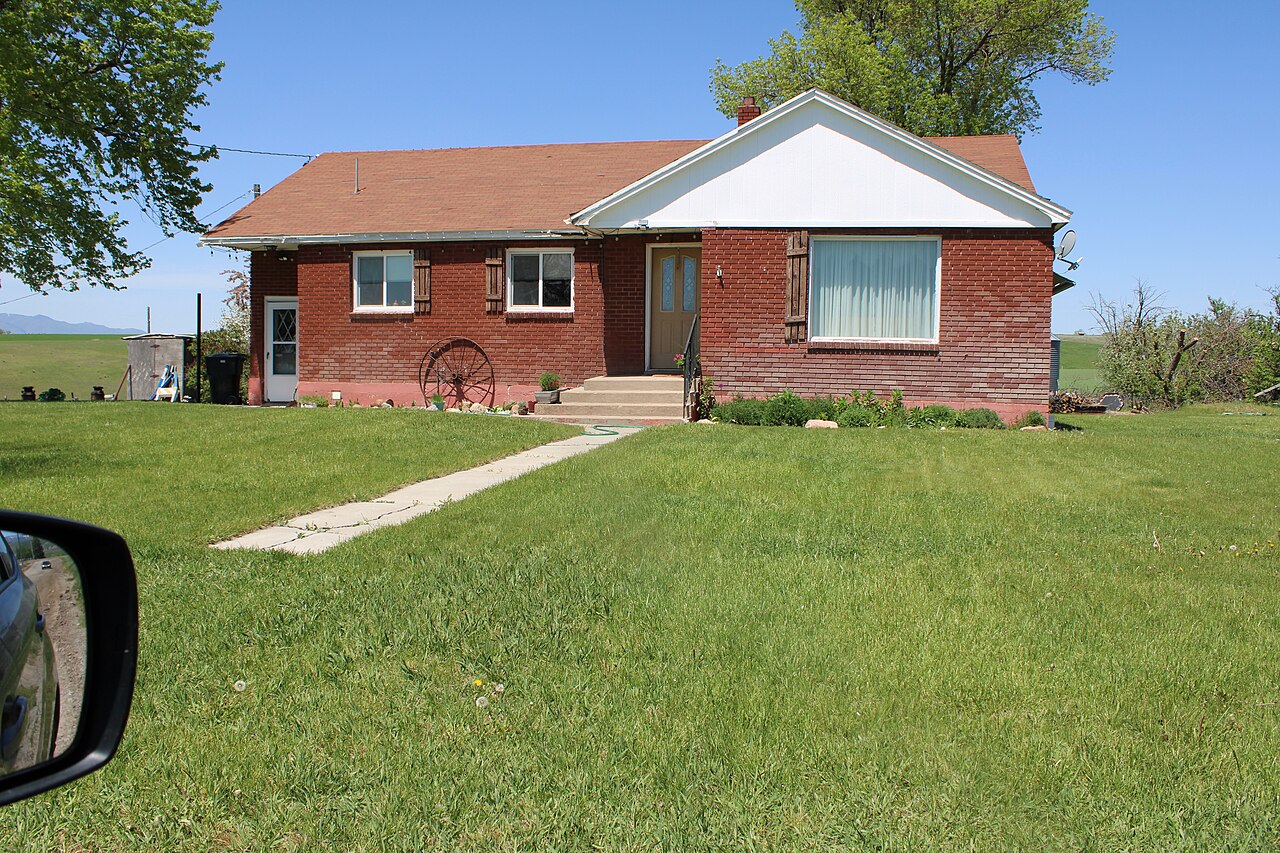
- People still visit the house. For several years Preston held a Napoleon Dynamite festival, with a tetherball tournament, a tater tot eating contest and a moon boot dance. The house where Napoleon lives is still there, outside town.
- A problem for computers. When Netflix ran a contest to improve its recommendations, films like this one turned out to be the hardest to predict. People either love it or hate it, and their other ratings say very little about which. It came to be called the Napoleon Dynamite problem.6
- It kept going. Fox made an animated series with the original cast in 2012, which lasted six episodes. For its 20th anniversary, the film went back to Sundance in January 2024 in a new 4K restoration from the original negative. Hess went on to direct Nacho Libre and, more than twenty years later, A Minecraft Movie.
Notes
Peluca is Spanish for wig. ↩
Test audiences were confused about when the story took place, and that's the reason the opening titles exist at all. ↩
The 2022 census counted 5,613 people. ↩
In Brazilian folklore the lobisomem, the werewolf, is often said to be the seventh son born after six daughters, and to turn into a wolf on Friday nights. ↩
The scene also won Best Musical Performance at the 2005 MTV Movie Awards. ↩
The phrase was used in 2008 to describe the Netflix Prize, a contest that offered a million dollars to whoever could make its recommendations 10% more accurate. ↩