

Saw That III: The Best Offer
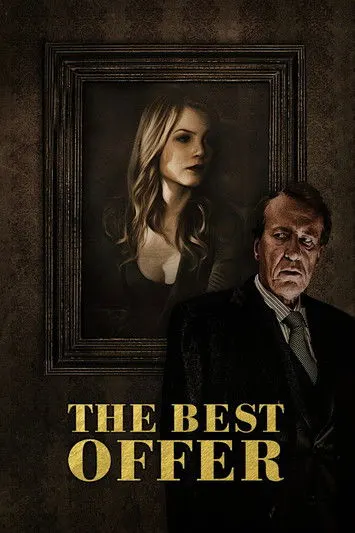
La migliore offerta, O Melhor Lance in Brazil
- year
- directed by
- written by
- Giuseppe Tornatore
- starring
- Geoffrey Rush, Jim Sturgess, Sylvia Hoeks, Donald Sutherland
- photography
- Fabio Zamarion
- music
- Ennio Morricone
- runtime
- 2h 11m
- genre
- drama, romance, crime
- from
- Italy
A master of possession. A crime of obsession.
Tornatore's 2013 film about an auctioneer who can spot a fake painting at a glance and has never learned to read a person. It warms you up for two hours and then knocks you flat. Spoilers are marked.
I'd never seen The Best Offer until this weekend. I enjoyed it. It's a film that comforts you, takes you round and round, warms your heart and then, out of nowhere, puts you on the floor.
The first half of this review is safe to read. The spoilers are marked further down, and with this film they matter, because most of what it does only works if you don't see it coming.
What it is #
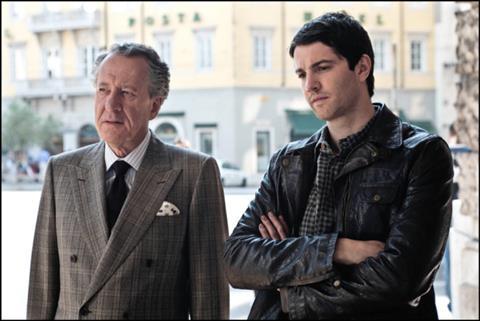
The Best Offer, La migliore offerta in Italian, is a 2013 film written and directed by Giuseppe Tornatore, the director of Cinema Paradiso. It's an Italian production shot in English, the first time Tornatore made a film in that language.1 Geoffrey Rush plays Virgil Oldman, Jim Sturgess plays Robert, Sylvia Hoeks plays Claire and Donald Sutherland plays Billy. Ennio Morricone wrote the music, and the whole thing runs a little over two hours.
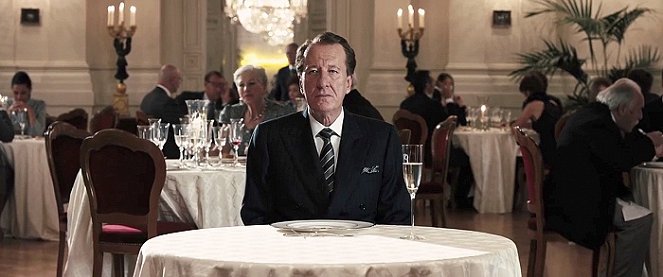
Virgil runs an auction house. When a collector needs to know whether a painting is real, he's the one they call, and he's almost never wrong. He's also arrogant, full of manias and cold. He wears gloves nearly all the time and avoids touching anyone. He eats alone in expensive restaurants and, at his age, has never been in love.
A man who looks at women only in paintings #
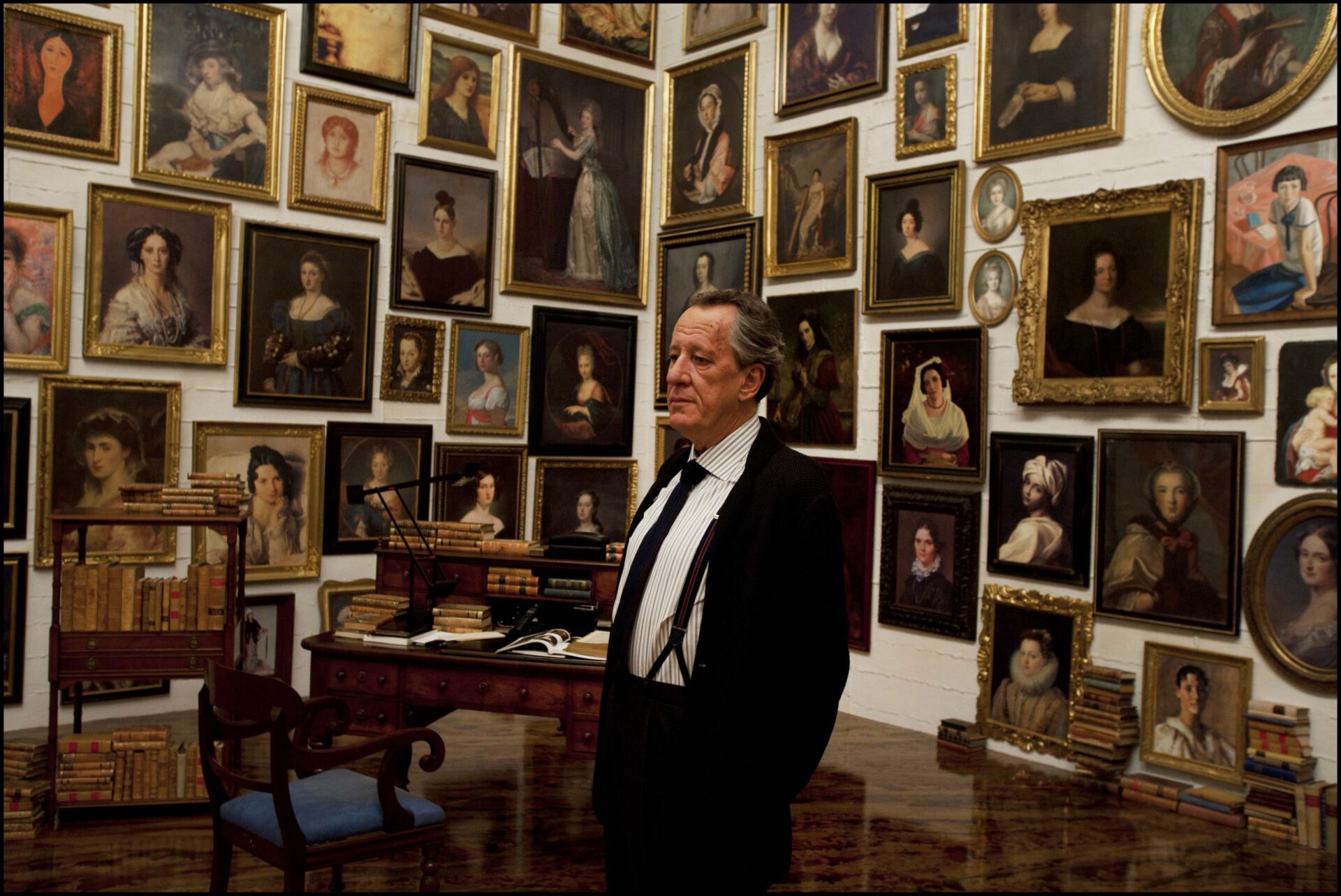
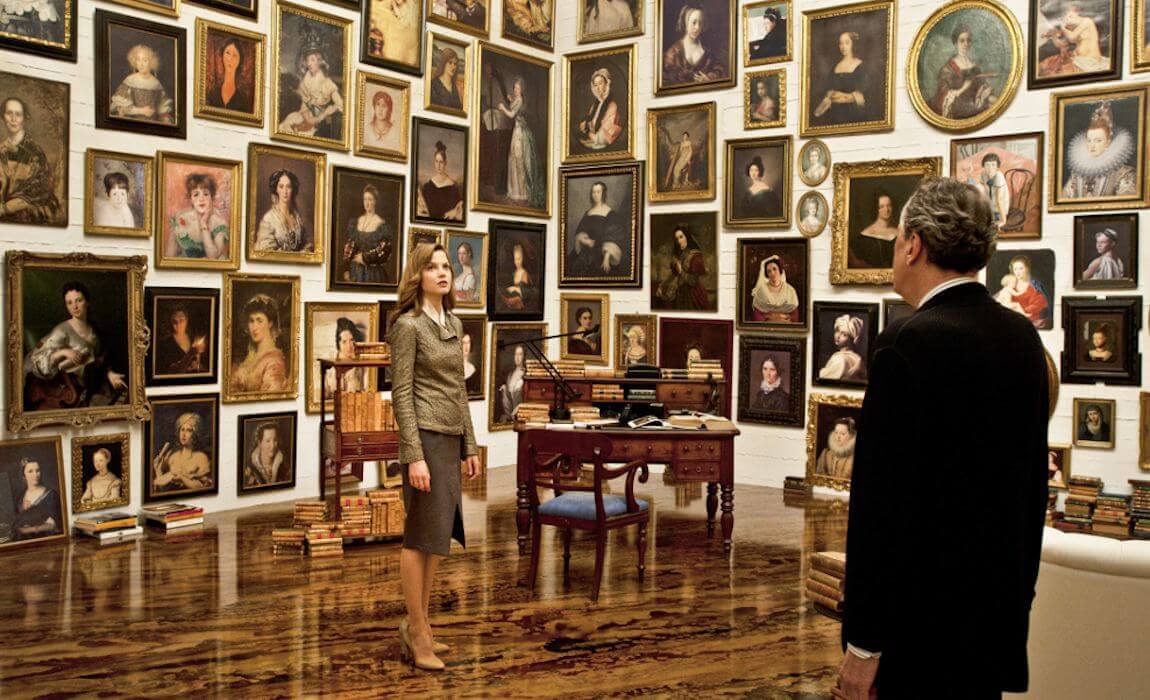
Behind a hidden door in Virgil's apartment there's a vault, and its walls are covered from floor to ceiling with portraits of women. He built that collection with Billy, an artist and an old friend. At his own auctions, Virgil lets a valuable portrait go out as a minor work, Billy bids on it for very little, and the painting ends up in the vault. Outside the two of them, nobody knows it exists.
Tornatore has said that Virgil can't look a woman in the eye and can only do it through paintings. The vault is exactly that. It's the only room where he relaxes, sitting in the middle of hundreds of faces that can't look back or ask him for anything. For a man who spends his life deciding what is genuine, it's a strange place to keep his feelings: every woman in there is real as an object and none of them is real as a person.
The film takes its time with this. Before anything happens, you know how Virgil eats, how he answers the phone and how he stands in that room. All of it will matter later.
A voice behind a wall #
Then a young woman calls. Her parents have died and left her a villa full of furniture and art, and she wants it valued and sold. Her name is Claire Ibbetson. She doesn't show up to the first meeting, or the second, and she always has an excuse. Virgil, who has thrown people out for less, keeps going back.
Claire says she has agoraphobia and hasn't left her room in years. So Virgil talks to her through a wall, from the other side of a locked door, and on the phone. They argue and make up without ever seeing each other. A man who doesn't touch anyone falls for someone he can't even see, and the film makes that feel almost reasonable. At one point he pretends to leave the villa and hides behind a statue in the hall just to look at her.
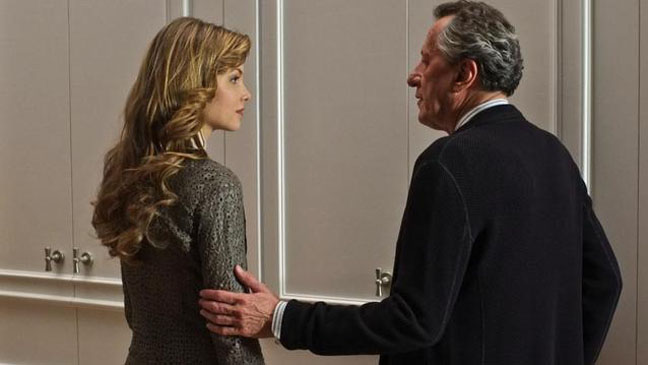
Sylvia Hoeks has a difficult role. For half the film Claire is only a voice, and several actresses turned the part down for that reason. When she finally appears, she has to be fragile, sharp and a little cruel, sometimes all in one scene.
Virgil doesn't know how to do any of this, so he asks for help. The person he asks is Robert, a young mechanic who has been fixing something else for him.
The automaton #
On his visits to the villa, Virgil keeps finding small metal parts in different corners of the house. He recognizes them as pieces of an eighteenth-century automaton that seem to carry the mark of Jacques de Vaucanson, and starts taking them to Robert's workshop. Robert puts the machine back together one piece at a time, and he also gives Virgil advice on women, the same way, one piece at a time.
Vaucanson was real. He was a French inventor, born in 1709, and in 1737 he built a life-size flute player that could play twelve tunes. He followed it with a figure that played a pipe and a tambourine, and with his most famous machine, a duck that ate grain and then seemed to digest it.2
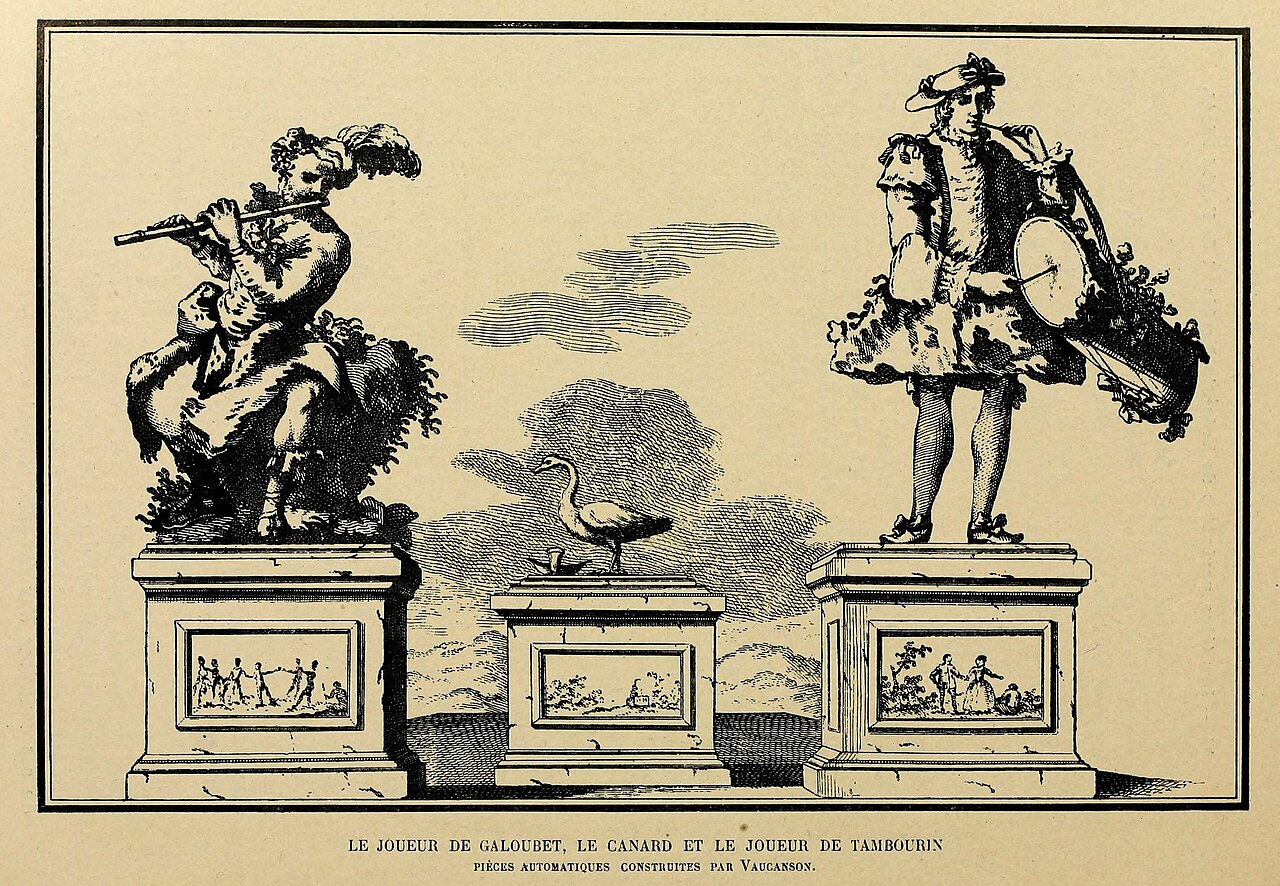
Choosing Vaucanson makes sense for this story. His work was about machines that imitate living things so well that people forget they're machines, and the film is about a man who has spent his life telling copies from originals. Watching Robert rebuild the automaton is also watching the story assemble itself, gear by gear, right in front of Virgil.
How it's shot and scored #
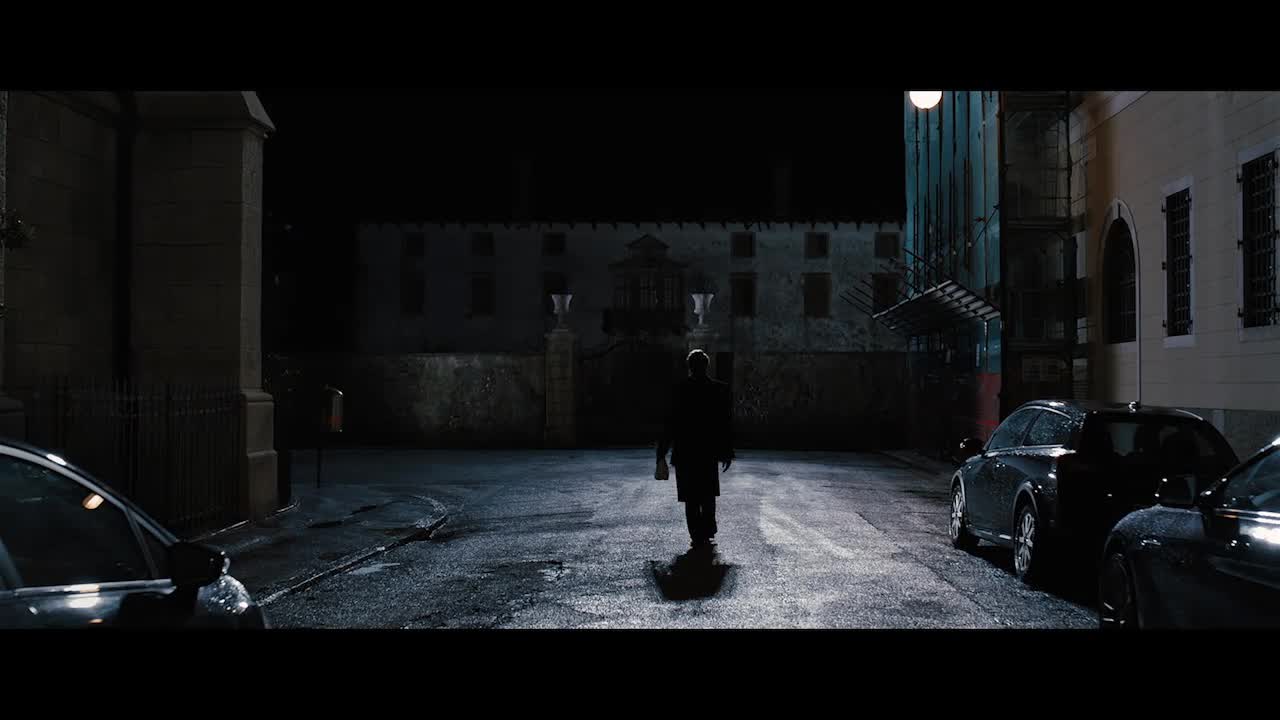
Most of the film was shot in Trieste and in the countryside of Friuli, with more scenes in Milan, South Tyrol, Vienna and Prague. Claire's villa is a real place, Villa Colloredo Mels Mainardi, near Udine. Virgil's building is a palace in Vienna. That mix gives the city in the film a slightly unreal feel, a rich European city that you can't quite place.
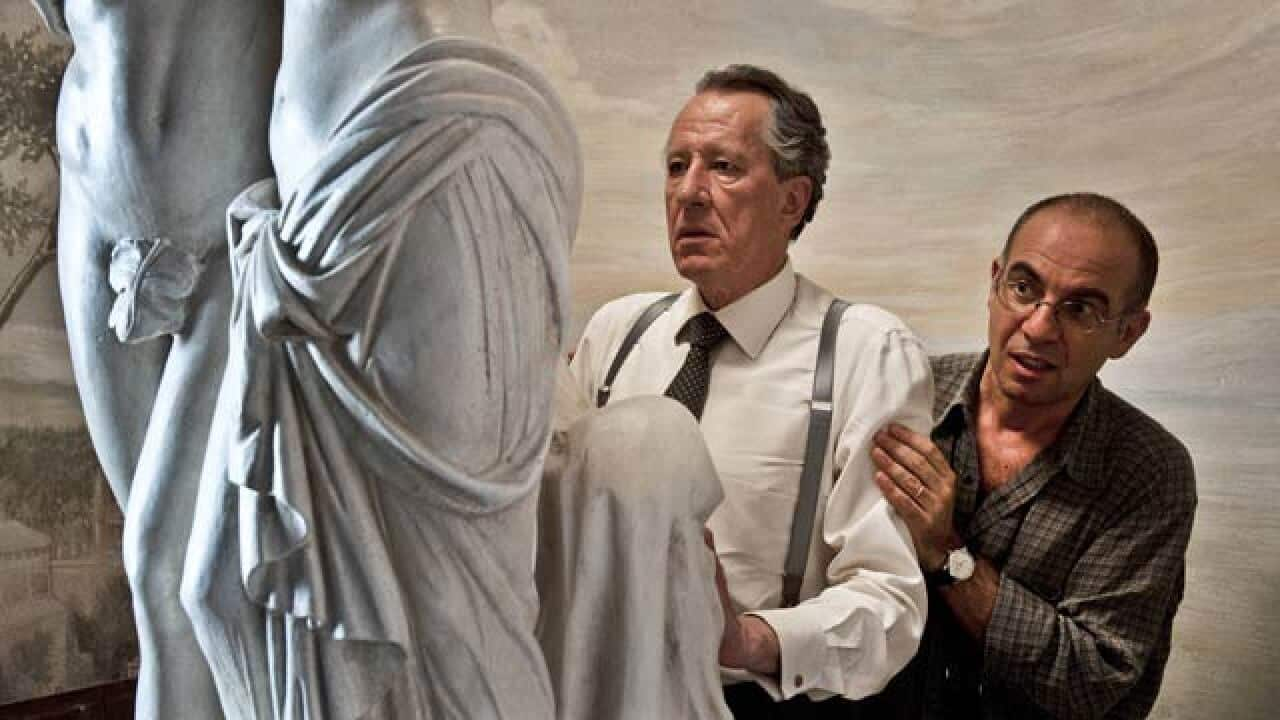
The cinematographer, Fabio Zamarion, fills almost every frame with things: frames, statues, clocks, furniture under sheets. Virgil is usually surrounded by objects and very rarely by people.
Morricone's score does a lot of the work. Tornatore usually talks to him about the music as soon as a script is finished, before anything is shot, and the two had worked together for decades by then.3 The score won the David di Donatello, Italy's top film award, and the European Film Award for best composer.
Spoilers from here #
Spoiler warning: everything below gives away the ending.
Claire leaves her room. She goes out, she becomes Virgil's lover, and he shows her the vault. He decides to retire, goes to London for one last auction, and comes home to find the vault empty. All the paintings are gone. In the middle of the room sits the finished automaton, and when it moves it plays a recording of Robert's voice repeating something Virgil himself likes to say: there is always something authentic concealed in every forgery.
Claire, Robert and Billy were in it together. The villa, the parents, the phobia and the automaton were all part of the bait. Billy leaves behind a portrait he painted of Claire, signed "With love and gratitude". Virgil can't even go to the police, because the collection was built through fraud in the first place.
Then comes the detail that hurts most. Across from the villa there's a bar, and in it a woman with an extraordinary memory for numbers, who has been sitting there in the background since early in the film. She's the one who owns the villa. She rented it to an engineer, she tells Virgil, and the girl he describes went in and out of the house hundreds of times.4
This is where the film puts you on the floor. Virgil was arrogant and cold, and he still couldn't resist a young woman who said she couldn't leave a room. He tried to save her. That was the most generous thing he did in the whole film, and it was the thing that took everything from him. She was the thief.
Looking back, the con is made out of Virgil's own habits. A man who likes to look without being seen got a woman he could only spy on, and a man who trusts objects more than people found the hook inside an old machine. Everything they built for him was fake, except perhaps a few of the feelings. The film never says whether Claire felt anything. The recorded line suggests someone did.
The ending #
Virgil spends months in a psychiatric hospital. When he gets out, he goes to Prague and finds Night and Day, a restaurant full of clocks and gears that Claire had once described as the place where she was happy.5 The room looks like the inside of the automaton. He sits at a table and waits.
The film ends there. It doesn't say whether she comes, or whether he believes she will. After two hours of a man who couldn't stand being near anyone, the last image is that same man alone, choosing to wait for the person who robbed him. You can read that as defeat or as the first honest thing he's ever done. Tornatore leaves it open.
Behind the film #
Tornatore had two ideas for more than twenty years, one about a woman with agoraphobia and one about an auctioneer, and neither worked on its own. The film began when he joined them: a man who can't love learns to, step by step.
He wrote Virgil with Geoffrey Rush in mind and sent him the script. Rush called back five days later saying he wanted to make it. Tornatore later described him as a mix of Marlon Brando and Marcello Mastroianni.
Some of the paintings in the vault are real and some are reproductions. For the real ones, museums and private owners gave permission for little or no money, in exchange for a mention in the end credits.
At the 2013 David di Donatello awards, the film won six, including best film, best director and best score. Critics outside Italy were much cooler.6 It cost about €13.5 million and made around $21 million worldwide.
Notes
-
In the UK it was released under a different title, Deception. ↩
-
The digestion was a trick. The grain went into one container and the droppings came out of another, prepared in advance. The magician Jean-Eugène Robert-Houdin examined the duck in 1844 and found it out. ↩
-
Cinema Paradiso, in 1988, was the first of many films they made together. By The Best Offer they were up to nine features. ↩
-
She's played by Kiruna Stamell, and the credits list her character as Claire. ↩
-
The Prague scenes were shot in the Old Town. The building used for Night and Day is on U Milosrdných street. ↩
-
The reviews in the US and the UK were mixed. Some critics found it convoluted and the romance dull. ↩