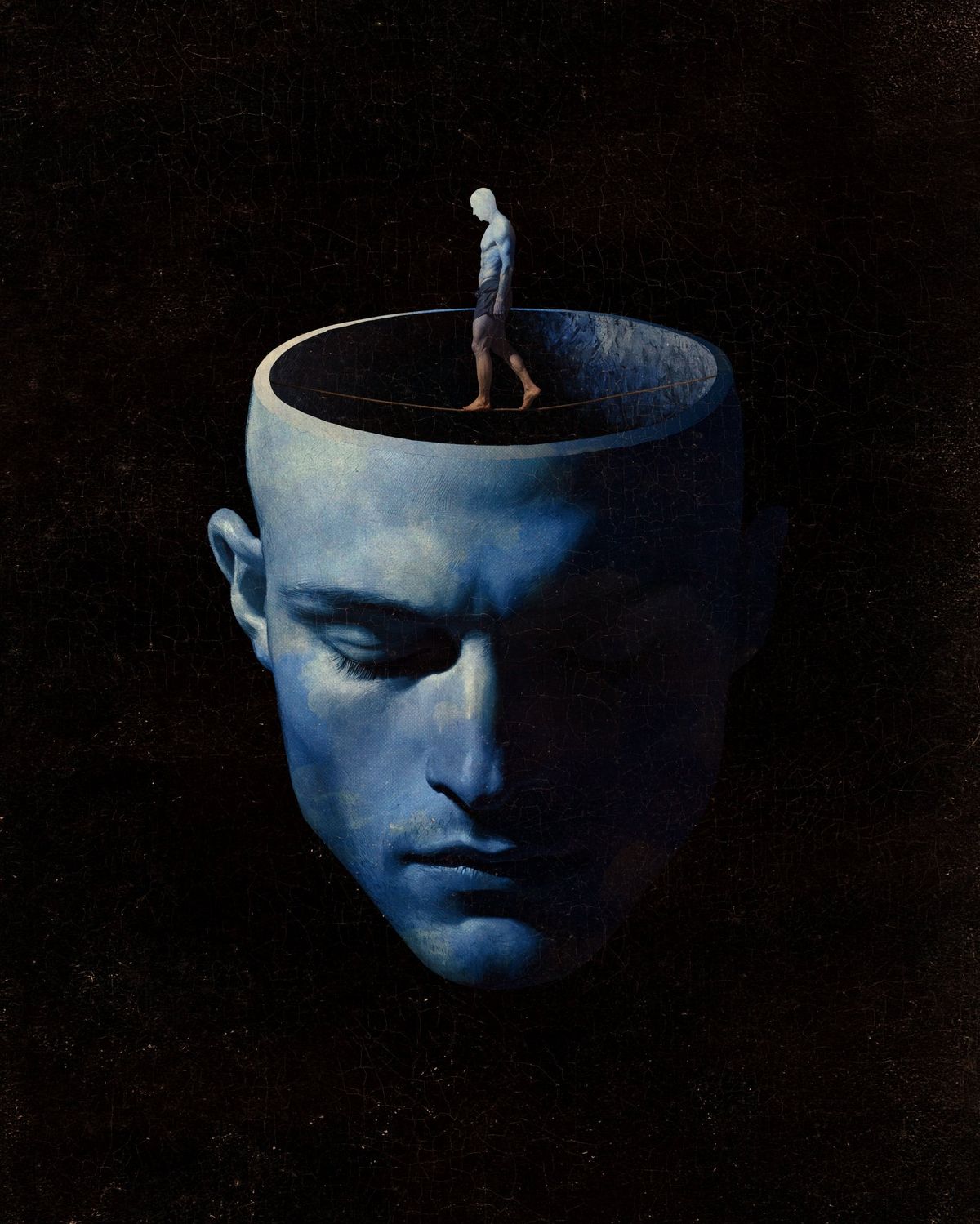

The Synthetic Problem
Well, I do not quite know how to begin this text, but I want to talk about AI.
I am a strong supporter and enthusiast of AI, especially for ordinary tasks such as translations, corrections, and revisions. But how far is that actually good?
I remember when I invested heavily in Nvidia in 2022. I knew what was coming, and I warned my friends. As ChatGPT was slowly and quietly entering the scene, I was not going to invest in the bakery; I was going to invest in the baker. That is how I ended up with Nvidia. And I must confess: as a veteran AI tester, I was impressed by ChatGPT.
I remember that a few months after using it for the first time, I discovered what was then still a baby: the so-called Stable Diffusion. And I thought it was incredible. The first versions ran on Google Colab notebooks, and man, the system’s roughness produced some truly insane aberrations.
That night, I went to sleep thinking about what AI would become. About its importance. Until that moment, I had never seen it as a threat. I saw it as a way to accelerate projects, rediscover things, and optimize processes.
The problem began when the enthusiasts started replacing their brains with AI: the laziness of thinking, the lack of creativity, the vague prompts. That was enough to unleash a synthetic wave.
In the momentum of progress, everyone began leaving originality aside and replacing it with the strangest creations generated by AIs. And that was when I felt it for the first time. It was horrible. I was allowing AI to correct my texts recklessly, without considering my humanity, my mistakes, my existential authenticity. I was selling my soul.
I decided to stop using it so frequently, afraid that I would become just another lazy person with an atrophied brain.
But then, one beautiful day, I was listening to a song on Spotify — metrically perfect — and I felt that urge to vomit again. The song was pure AI. It was synthetic. Fake emotions, fake feelings. That was when I fully understood the dead internet theory, the rise of absolutely synthetic content, and intellectual forgery.
I felt sad because I felt manipulated.
So I began a silent battle in search of soul in everything. A search for originality led me to everything made by hand, one search leading to another. And I found wonderful things along the way: a kind of resistance formed by visionaries who knew this future would come.
I found the creators of souls. Of real feelings. Of beauty.
And considering that this will be the most precious good in a few years, for now, I am satisfied.