
Movie - Cannibal Holocaust
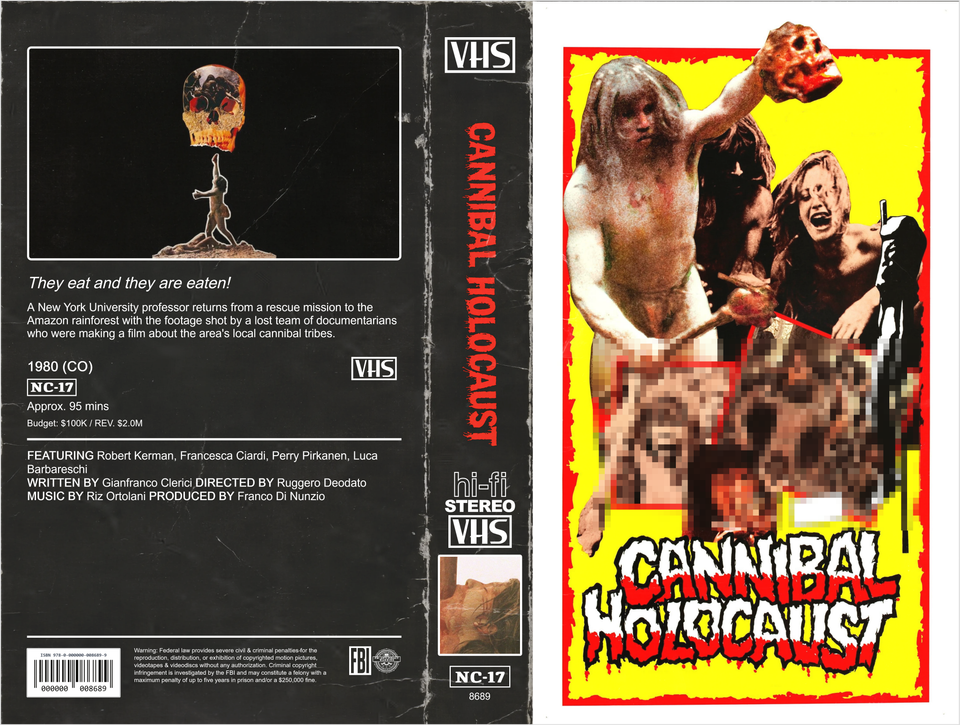
I watched Cannibal Holocaust for the first time a few years ago, and I remember finishing it feeling somewhat disappointed. After all the notoriety, the bans, and all the stories surrounding it, I found the whole thing rather silly, exaggerated, and even a little ridiculous.
I decided to watch it again today, but this time after reading quite a lot about what happened during and after the filming. And that completely changed the experience.
I still think it is a bad film in many ways, cinematically speaking. There are terrible performances, bad dialogue, unintentionally funny moments, and a cheap-looking production that cannot always be excused by the documentary style. At the same time, I realized that some of that ugliness actually works in its favor. Once the supposedly recovered footage begins, the shaky camera, awkward framing, and the feeling that you are watching something that should not exist make everything much more unpleasant.
And there is an unbelievable story behind it. The four main actors signed contracts requiring them to disappear from the media for a period after the film’s release. When accusations began to circulate that Cannibal Holocaust was a snuff film and that some of the deaths were real, their disappearance obviously did not help. Ruggero Deodato eventually had to prove that his actors were still alive. The film was seized shortly after its Italian release, and the director even faced accusations related to the supposed deaths.
The problem is that there is real violence in the film. The animals killed on camera were actually killed, including the famous turtle. There is no special effect or trick involved. Decades later, this is still the part I find hardest to stomach and almost impossible to defend.
Another thing I did not know the first time I watched it is that Deodato said he was thinking about the sensationalism of Italian television at the time, especially the violent imagery associated with the Red Brigades years. The idea was to question how far someone would go to obtain a shocking image. That makes the film much more interesting, because the real monsters in the story are not exactly the people the title tries to sell as savages. They are the civilized men holding the cameras.
And that is where the contradiction that bothered me most during this rewatch comes in: Cannibal Holocaust criticizes people who exploit suffering in order to create sensational images while the film itself exploits real suffering in order to create sensational images. It seems to understand perfectly well the perversity it is condemning while participating in that same perversity.
It is also impossible to ignore its importance. Long before The Blair Witch Project, it was already seriously playing with the idea of recovered material, lost cameras, and fiction presented as documentary evidence. In that sense, it is one of the foundational films of what we would later call found footage.
So my opinion changed quite a lot. I still think Cannibal Holocaust is an ugly, uneven, and often bad film.
I just do not think it is silly anymore.
Once you know the story behind it and understand better what it is trying to do, it becomes much heavier.
And, unfortunately, much more interesting.
Note: I didn’t include any images from the film, and you already know why.
Note 2: You can find the full film on Pablo Tube: https://pablo.tube